Required section · Section 2 of 6
What a capillary specimen actually is
Capillary blood is not simply venous blood in a smaller volume. It is a mixture with arterial, venous, and tissue-fluid contributions, drawn from the microvasculature at the puncture site. CLSI GP42, the current standard governing capillary collection, is explicit that this mixed composition means a capillary specimen is not automatically interchangeable with a venous one. In fasting healthy adults studied for GP42, several serum analytes differed by at least 5% between capillary and venous specimens, and manufacturer specifications together with the literature determine which specimen type is acceptable for a given test.
The practical result: capillary glucose can run higher than venous serum glucose, and newborn capillary hemoglobin and hematocrit can be up to 12% higher than venous values on the first postnatal day. These are not measurement errors. They reflect real physiological differences in what is being sampled. A laboratory's test menu, not a universal conversion factor, determines whether a given assay accepts capillary blood and how its result should be interpreted relative to a venous reference interval.
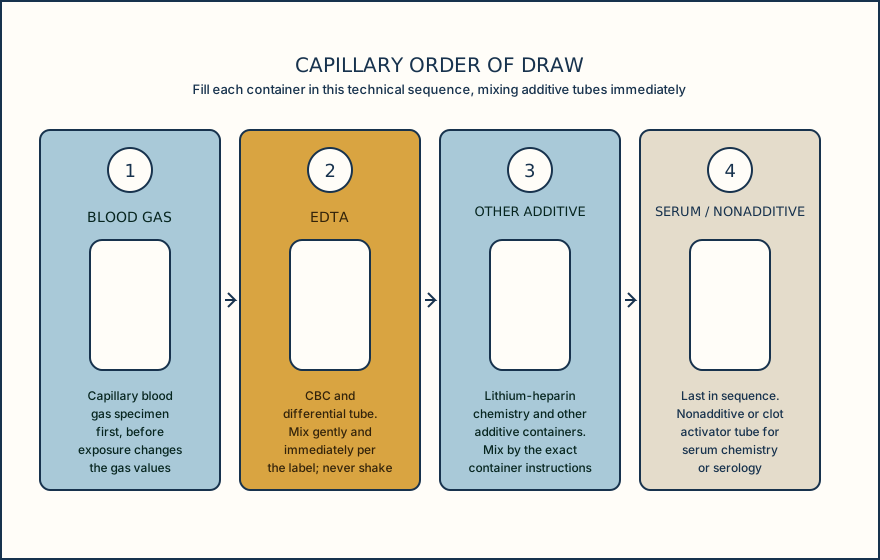
The process map below lays out the reusable sequence for any capillary collection: confirm the order and volume needed, select and prepare the site, let the antiseptic dry, warm if indicated, puncture to the appropriate depth, wipe the first drop unless device instructions say otherwise, collect in the correct order with a freely forming drop, then mix additive tubes immediately by their exact instructions. Every step stays visible because a failure at any one step propagates into the next; a poorly dried antiseptic contaminates the first drop, and a forced drop from squeezing dilutes the specimen with tissue fluid regardless of how carefully the rest of the sequence is followed.
Treat a capillary result as a distinct specimen type with its own physiology, not a smaller version of a venous draw, and check the test's stated acceptability for capillary blood before trusting the number against a venous-derived reference interval.
Illustrative drawing — this picture was drawn rather than captured.
Reusable capillary collection sequence from order confirmation through mixing
Confirm order and volume
Identify every test needed, the required volume, and the technical fill order before the first puncture.
Select and prepare the site
Choose an approved site by age, condition, and device; clean it and let the antiseptic dry fully.
Puncture to the approved depth
Warm if indicated, then puncture with a device set to the depth approved for the patient's age and site.
Manage the first drop
Wipe the first drop away unless the point-of-care or collection-device instructions state otherwise.
Collect in the technical order
Fill blood gas first, then EDTA, then other additive microcontainers, then serum or nonadditive specimens, using a freely forming drop.
Mix additive tubes immediately
Gently mix each additive microcontainer right away by its exact container instructions; shaking is not an acceptable substitute.
Knowledge checks
Reading and checks are open. Sign in only to save.
Knowledge check 1
Section status
Finish this section
Reading and checks are open. Sign in only to save.
The module finishes after every required section is marked done and every check in those sections is correct.