Required section · Section 3 of 6
Site, depth, and technique variables that decide specimen quality
Site selection starts with age. Use a finger for adults and older children. Do not use a finger in newborns or infants younger than 6 months; the approved site is the medial or lateral plantar heel, with puncture depth set by the selected device's instructions for use. For children 6 to 12 months who weigh more than 10 kg, a finger may be used only with a lancet depth that does not exceed 1.5 mm. This is the one numeric depth threshold GP42 states directly; every other depth, warming time, and first-drop exception is device- and local-policy-specific, so the controlled procedure and device instructions for use govern in practice.
Site restrictions apply regardless of age. Do not use the fifth finger or an infected site. Avoid extensive scars, healed burns, inflamed or edematous tissue, and a previously punctured site. A post-mastectomy-side limb requires the permission your local policy specifies before it is used. Edema deserves particular attention: it can contaminate or dilute a capillary specimen with tissue fluid even when the puncture technique is otherwise correct, which is exactly what happened at the edematous site in the opening case. Using infected, scarred, burned, edematous, or previously punctured sites can introduce contamination, altered specimen composition, poor flow, or patient harm; when the current procedure retains a site restriction, follow its required alternative or escalation path.
Capillary collection is not always the right choice. GP42 identifies situations where it may be inappropriate: severe dehydration, poor circulation, peripheral edema, a callus, ulcer, or blister at the intended site, a need for large specimen volume, plasma coagulation studies, or a clinical need to assess arterial oxygenation. On that last point, capillary pO2 correlates poorly with arterial pO2 and can underestimate oxygenation in newborns, children, and sick adults, so a capillary blood gas answers a narrower question than an arterial one.
Technique failures are largely preventable. Clean the site, let the antiseptic dry completely, and let the drop form freely rather than forcing it with repeated squeezing; excessive squeezing or massaging introduces tissue fluid and contributes to hemolysis, the same failure pattern seen in the opening case. Wipe the first drop unless the exact point-of-care or collection-device instructions direct otherwise. When multiple capillary specimens are needed, the supporting technical sequence is blood gas, then EDTA, then other additive specimens, then serum or nonadditive specimens, and every additive microcontainer needs immediate, gentle mixing by its own instructions.
Two collection contexts carry their own quality rules. Whole-blood microcollection for point-of-care testing depends on the exact analyzer and device instructions for specimen type, volume, and acceptable flags; a dried-blood-spot card for newborn screening must follow the state program's card instructions and rejection criteria, with a freely forming drop applied directly to the approved card, avoiding smearing, layering, contamination, and incomplete filling of each circle.
A dry antiseptic, an approved site free of edema and restriction, the correct depth for the patient's age, and a freely forming drop are the four variables most likely to determine whether the specimen you collect is usable at all.
Illustrative drawing — this picture was drawn rather than captured.
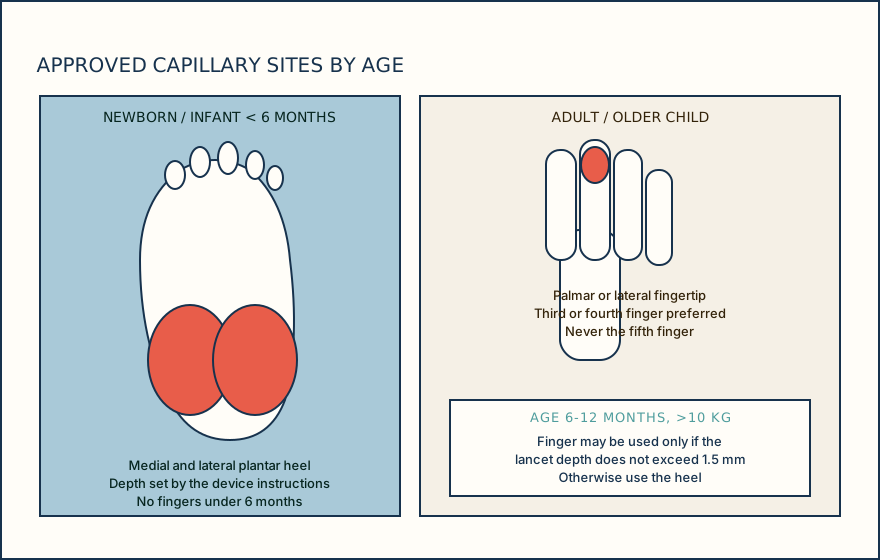
| Age group | Approved site | Depth rule | Key restriction |
|---|---|---|---|
| Newborn to under 6 months | Medial or lateral plantar heel | Set by the device instructions for use | No fingers in this age group |
| 6 to 12 months, more than 10 kg | Finger may be used | Lancet depth must not exceed 1.5 mm | Otherwise use the heel |
| Older child and adult | Finger, third or fourth preferred | Set by device instructions for use | Never the fifth finger or an infected or restricted site |
Knowledge checks
Reading and checks are open. Sign in only to save.
Knowledge check 1
Knowledge check 2
Knowledge check 3
Knowledge check 4
Section status
Finish this section
Reading and checks are open. Sign in only to save.
The module finishes after every required section is marked done and every check in those sections is correct.