Required section · Section 2 of 6
What the risk screen is protecting
Every disposition decision starts from the same four questions, asked in order, because each one closes off different options. Question one is identity: is the specimen positively linked to the correct patient and order? Question two is irreversibility: can the collection event be repeated, or is the material irreplaceable? Question three is whether the procedure authorizes a disposition such as proceed, prioritize, hold, release, recollect, or reject; it is not a question of repairing an underfilled specimen after receipt. Question four is urgency: what does the current procedure require while a disposition is pending?
A federal quality standard requires the laboratory to have written policies that ensure positive patient-specimen identification and specimen integrity from collection through reporting, and requires written preanalytic procedures that address labeling, storage, transport, processing, and acceptability or rejection. That written procedure, not an individual's judgment call at the bench, is what a laboratory professional is actually applying when running the risk screen.
An unlabeled or mismatched-identity specimen sits in its own category. It creates a linkage risk that, once testing proceeds, cannot be undone; a laboratory handles it under its written identification-correction and exception policy, never as an informal bench workaround. Question one, answered no, generally forecloses questions two through four for that specimen.
A specimen defect is not automatically a universal rejection. Whether a given defect matters depends on the requested measurand, the specimen type, the method, and the laboratory's own validated acceptance criteria; the same hemolyzed tube can be unusable for one analyte and perfectly fine for another on the same instrument.
Run the four questions in order, because identity and irreversibility can end the discussion before correctability and urgency ever matter.
Illustrative drawing — this picture was drawn rather than captured.
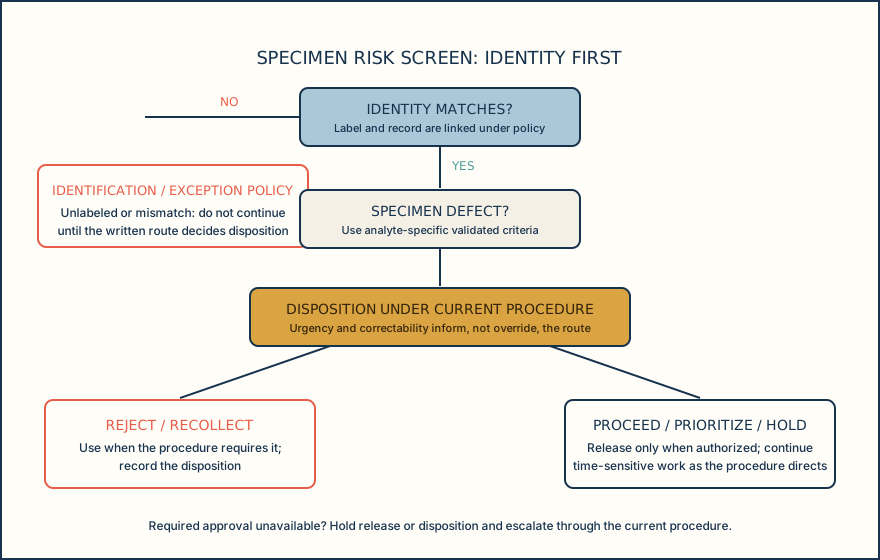
Working through the risk screen from receipt to disposition.
Check identity
Confirm the specimen is labeled and matches the order with the laboratory's required identifiers. A failure here routes to the identification and exception policy, not to the bench alone.
Check irreversibility
Ask whether the same collection can be repeated. Cerebrospinal fluid, tissue, a timed collection, or a pediatric low-volume draw may be difficult or unsafe to recollect.
Check correctability
Separate a processing issue, such as delayed separation within stability limits, from a compromised patient collection such as the wrong additive. Only the former is fixable after receipt.
Check urgency
Weigh whether waiting for recollection delays needed care. Urgency can support an approved exception but never overrides an identity failure or a safety concern.
Choose and document the disposition
Reject, recollect, correct, or accept under an approved, documented exception, then write the required comment and notify the ordering team according to local policy.
Knowledge checks
Reading and checks are open. Sign in only to save.
Knowledge check 1
Section status
Finish this section
Reading and checks are open. Sign in only to save.
The module finishes after every required section is marked done and every check in those sections is correct.