Required section · Section 3 of 6
Prohibited practices, disposition, and what does not need PT
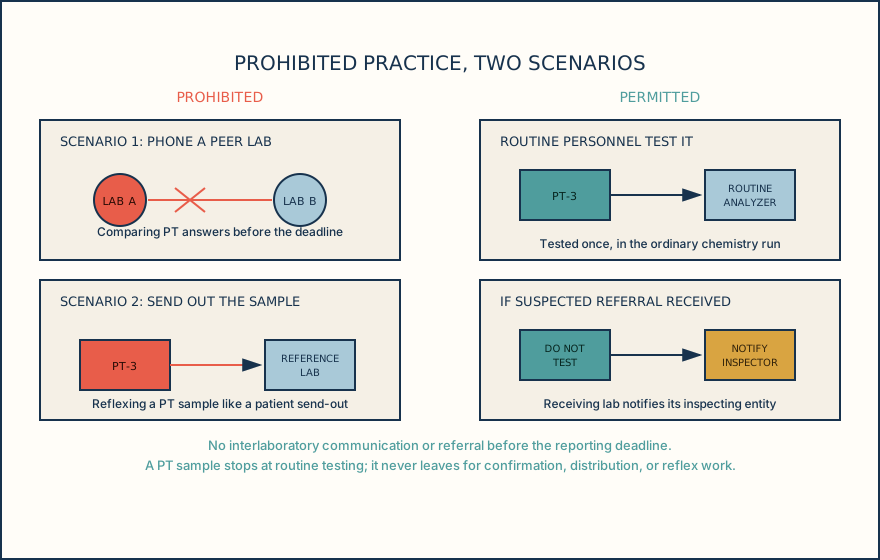
Two practices are specifically prohibited around a PT event, and both undermine the point of an external check. First, a laboratory must not communicate PT results with another laboratory before the reporting deadline; comparing answers, even informally, defeats the independence the check depends on. Second, a laboratory must not refer a PT sample to another laboratory for testing of any kind, including work it would routinely send out for a patient specimen. A laboratory that suspects it received a referred PT sample should decline to test it and notify its inspecting entity rather than reporting a result on someone else's challenge.
The provider sets the reporting deadline. A late or untested material receives a score of zero for that material. An event is unsatisfactory only if its applicable minimum event score is not attained; unsuccessful participation is a separate repeated-event determination. One unacceptable material requires review and investigation, but does not automatically make the event unsatisfactory.
Scale the response to the event score and investigation findings. Document the review, correct any identified cause, and monitor the action; use the current provider report and the laboratory procedure to determine any escalation.
Not every nonwaived test has a PT program to enroll in. For a test or procedure that Subpart I does not cover, CLIA still requires documented accuracy verification at least twice a year, including calculated results where they apply. That verification is not optional just because no PT provider offers the analyte; the laboratory designs and documents its own check on a fixed schedule.
Know the deadline, compare the event score with its applicable minimum, and know that unsatisfactory is not the same finding as unsuccessful.
Illustrative drawing — this picture was drawn rather than captured.
Knowledge checks
Reading and checks are open. Sign in only to save.
Knowledge check 1
Knowledge check 2
Section status
Finish this section
Reading and checks are open. Sign in only to save.
The module finishes after every required section is marked done and every check in those sections is correct.