Required section · Section 2 of 6
How a PT sample moves through the laboratory
Proficiency testing is required only for the nonwaived specialties, subspecialties, analytes, and tests that CLIA Subpart I actually lists. A laboratory maps its own test menu against that list rather than assuming every nonwaived test is regulated; some nonwaived analytes have no PT program listed at all and fall to alternate assessment instead. For a regulated analyte, the laboratory enrolls in an HHS-approved PT program that covers it. When more than one approved program covers the same analyte, the laboratory designates which program it uses to meet CLIA. It generally stays in that program for a full calendar year before switching, and notifies CMS before changing. A new laboratory, or one that adds a regulated test mid-year, enrolls as soon as possible and completes the remaining program year. If a mid-year program change was not notified as required, follow the laboratory's PT procedure to confirm the current designation and make the required notification; do not assume the changed enrollment satisfies the requirement.
Once a PT sample is reconstituted as the provider directs, it stops being special. It goes into the ordinary run, gets tested by the routine personnel who would test a patient specimen that day, receives the same number of repetitions a patient specimen would receive, and moves through the laboratory's normal reporting pathway up to the point where a patient result would be sent out or referred. Nothing about routine handling changes because the sample happens to be a PT challenge.
The one place PT samples diverge from patient samples is at the laboratory's boundary: a PT sample never leaves the laboratory. The laboratory must not communicate PT results with another laboratory before the event's reporting deadline, and it must not refer a PT sample out for testing, including for routine confirmatory, distributive, or reflex work that a patient specimen might normally receive. A laboratory that receives a sample it suspects was referred to it as someone else's PT challenge should not test it, and should notify its inspecting entity instead.
After testing, the analyst and the laboratory director attest to the testing and reporting as required, the laboratory submits results by the provider's deadline, and the provider grades the event. The laboratory keeps preparation, handling, testing, reporting, attestation, evaluation, and corrective-action records for at least two years from the event date, because that record is what an investigation and a later inspection both depend on.
Enroll by mapped analyte, handle every PT sample exactly like a routine specimen, and never let it leave the building before the deadline.
Illustrative drawing — this picture was drawn rather than captured.
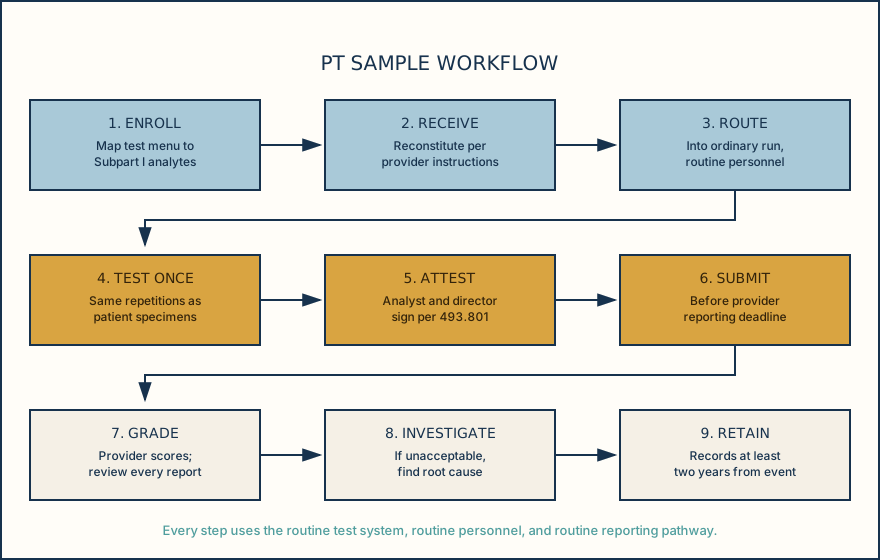
The routine path a PT sample takes from arrival to a graded, retained record.
Map and enroll
Confirm the analyte is listed in CLIA Subpart I and enroll in the laboratory's designated HHS-approved program for it.
Receive and prepare
Reconstitute the material exactly as the provider directs; provider-directed preparation is the one allowed departure from patient handling.
Route into the routine run
Place the sample into the ordinary workload for routine personnel to test, with no special treatment after preparation.
Attest and submit
The analyst and director attest to testing and reporting, and the laboratory submits before the provider's deadline without communicating results to another laboratory.
Grade and review
The provider grades the event; the laboratory reviews every report, including a passing report with one failed material, rather than filing it unread.
Retain the record
Preparation, handling, testing, reporting, attestation, evaluation, and corrective-action records are kept at least two years from the event date.
Knowledge checks
Reading and checks are open. Sign in only to save.
Knowledge check 1
Knowledge check 2
Section status
Finish this section
Reading and checks are open. Sign in only to save.
The module finishes after every required section is marked done and every check in those sections is correct.