Required section · Section 4 of 6
Working the sodium investigation
Back to the sodium event. The primary method is an indirect ion-selective electrode (ISE) on the routine chemistry analyzer. Materials were reconstituted at 08:10 as directed, placed into the ordinary run, and tested once each by the assigned technologist between 09:02 and 09:21. PT-3 measured 151 mmol/L and was reported at 14:00. The provider later reports PT-1, PT-2, PT-4, and PT-5 acceptable and PT-3 unacceptable. There is no patient reference interval here; PT materials are not patient specimens, so no clinical interpretation attaches to any of these five numbers.
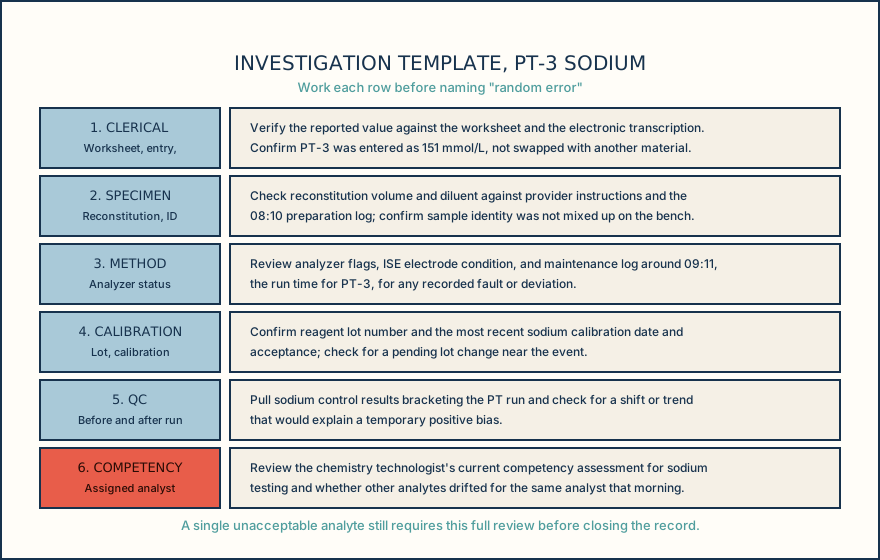
The investigation starts where the evidence is cheapest to check and moves toward where it is most expensive to rule out. First, clerical: does the worksheet value of 151 mmol/L match the electronic entry, and was PT-3 correctly identified rather than swapped with an adjacent material during reconstitution or loading? Second, specimen: was the reconstitution volume and diluent correct against the provider's instructions, and does the preparation log for 08:10 show anything irregular for that material specifically?
Third, method: were there any analyzer flags, ISE electrode faults, or maintenance events logged around 09:11, the run time for PT-3? Fourth, calibration and reagent: what lot was in use, when was sodium last calibrated, and was a lot change pending or recent? Fifth, quality control: pull the sodium controls that bracket the PT run and look for a shift, trend, or out-of-range result that would explain a temporary positive bias affecting PT-3 specifically rather than a specimen-identification error. Sixth, competency: check the assigned technologist's current sodium competency assessment and whether any other analyte drifted for that same analyst that morning.
If this review turns up evidence of a temporary sodium bias, for example a control shift that recovered after a mid-shift maintenance action, the laboratory identifies the interval the bias likely affected and reviews patient sodium results released during that interval under its documented patient-result review process. This is not automatic panic over every patient sodium value that day; it is a bounded, documented lookback tied to the evidence the investigation actually found, following local policy for the review method and any clinician notification.
Whatever the root cause turns out to be, the corrective action is not finished at the explanation. The laboratory documents what it implemented and monitors the next relevant controls, and the next applicable PT or alternate-assessment event, to confirm the defect does not recur. An investigation that ends at 'found the cause' without a monitoring step is incomplete.
Work clerical, specimen, method, calibration, QC, and competency in that order before writing 'random error' on any investigation form.
Illustrative drawing — this picture was drawn rather than captured.
| Material | Result (mmol/L) | Time | Provider grade |
|---|---|---|---|
| PT-1 | 140 | 09:02 | Acceptable |
| PT-2 | 132 | 09:07 | Acceptable |
| PT-3 | 151 | 09:11 | Unacceptable |
| PT-4 | 138 | 09:16 | Acceptable |
| PT-5 | 145 | 09:21 | Acceptable |
Knowledge checks
Reading and checks are open. Sign in only to save.
Knowledge check 1
Knowledge check 2
Section status
Finish this section
Reading and checks are open. Sign in only to save.
The module finishes after every required section is marked done and every check in those sections is correct.