Required section · Section 4 of 6
Scoring and sequencing the 16:40 findings
Prioritize each finding by the harm it can cause now and who can be exposed—not by a universal priority. The uncapped blade and overfilled sharps container can injure the next person immediately. A damp walkway must be controlled before anyone crosses it. The power-strip and ladder findings need prompt correction before they create their own exposure.
The damp walkway is on a through-route. Barricade or correct it before crossing; do not defer control because it was assigned a particular priority.
The daisy-chained strip is a fire and shock hazard. Remove it from service and arrange safe correction; do not rely on a priority threshold to decide when action is needed.
The ladder-use finding requires immediate correction of the unsafe practice and a safe access method before the task resumes.
Priority follows immediate harm and exposure: control hazards that can reach someone now, including the walkway before crossing it; then correct conditions that can create the next exposure. The blade is handled with a holder or forceps and the overfilled container is replaced under facility procedure.
Use this reasoning for any walk-through: immediate harm and exposure determine urgency. The five findings are a case aid, not a universal priority system.
An active exposure that could reach the next person who walks by outranks a hazard that only becomes active if someone acts unsafely again, and both outrank a hazard that has already stopped.
Illustrative drawing — this picture was drawn rather than captured.
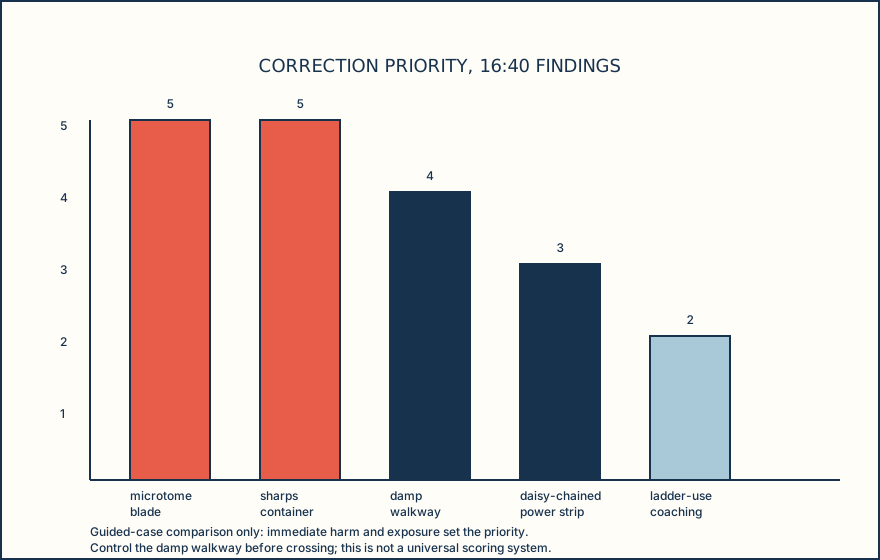
| Finding | Decision | Reasoning |
|---|---|---|
| Uncapped microtome blade | Control based on immediate harm and exposure | Active percutaneous exposure to the next person at that station |
| Overfilled sharps container | Control based on immediate harm and exposure | Active bloodborne exposure, existing control has failed |
| Damp walkway near reagent shelf | Control based on immediate harm and exposure | Same-shift fall risk on a through-route, needs a person to cross it |
| Daisy-chained power strip | Control based on immediate harm and exposure | Real fire/shock hazard, not actively arcing at time of observation |
| Top-cap ladder use | Control based on immediate harm and exposure | Behavior already stopped, coaching item rather than active hazard |
Knowledge checks
Reading and checks are open. Sign in only to save.
Knowledge check 1
Knowledge check 2
Section status
Finish this section
Reading and checks are open. Sign in only to save.
The module finishes after every required section is marked done and every check in those sections is correct.