Required section · Section 1 of 6
The 16:40 walk-through
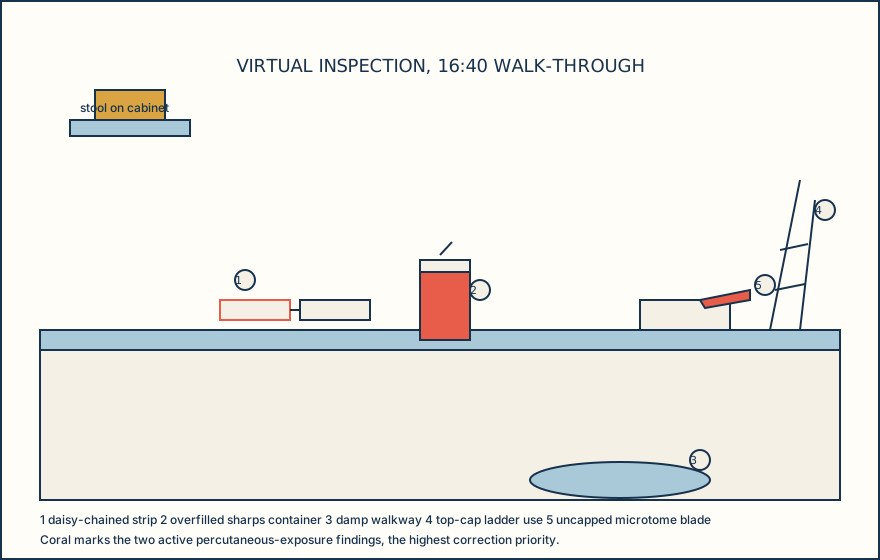
A routine end-of-shift walk-through of a core chemistry and hematology bench area turns up five findings in under ten minutes, none of them dramatic on their own. A power strip feeding a secondary analyzer is plugged into a second power strip behind the bench, itself now also feeding a space heater and a phone charger. A sharps container at the phlebotomy station is filled above its fill line with a used needle visible near the opening.
A spilled liter of isopropanol was wiped up, but the floor near the reagent shelf is still visibly damp in a walkway that leads to the automated line. A step stool sits on top of a supply cabinet, and the technologist mentions standing on the top cap of a nearby two-step ladder earlier in the shift to reach an upper shelf. At the adjacent histology bench, a used microtome blade sits uncapped on the stage after the prior case.
None of these five findings is a fire, a shock, a needlestick, or a fall at the moment they are found. That is exactly the point of a walk-through: every one of them is a hazard, a condition with the potential to become an injury, caught before it acts on anyone. The bench question is the same for all five: what ordinary physical hazard is present, and which prevention or immediate response keeps it from becoming an injury.
A laboratory is not a hazard-free space and does not try to be. It is a space where fire, electricity, sharp edges, repetitive load, spilled liquid, height, heat, and moving machinery are all present by design, and where recognizing each one and applying a known control is a routine bench skill, not a special event, using the same prioritization and response reasoning a working technologist uses at 16:40 on any shift, applied here to the five findings above.
A walk-through finding is not a judgment on a person, it is a caught hazard, and the job at that moment is to classify it, control what is within scope, and report the rest.
Illustrative drawing — this picture was drawn rather than captured.
Knowledge checks
This section has no knowledge checks.
Section status
Finish this section
Reading and checks are open. Sign in only to save.
The module finishes after every required section is marked done and every check in those sections is correct.