Required section · Section 1 of 6
Opening laboratory problem: a result that cannot name itself
An adult EDTA whole-blood specimen is assessed in the complete opening result table: CBC, reticulocytes, morphology, HPLC fractions, and transfusion history appear there once.
The question is not whether the printout has an S label. The question is whether the combined evidence supports HbS presence and what still separates trait, disease-pattern families, coinheritance, or transfusion effect. The HPLC result measures fractions in method-specific retention windows. It does not turn a measured S-window fraction into a genotype.
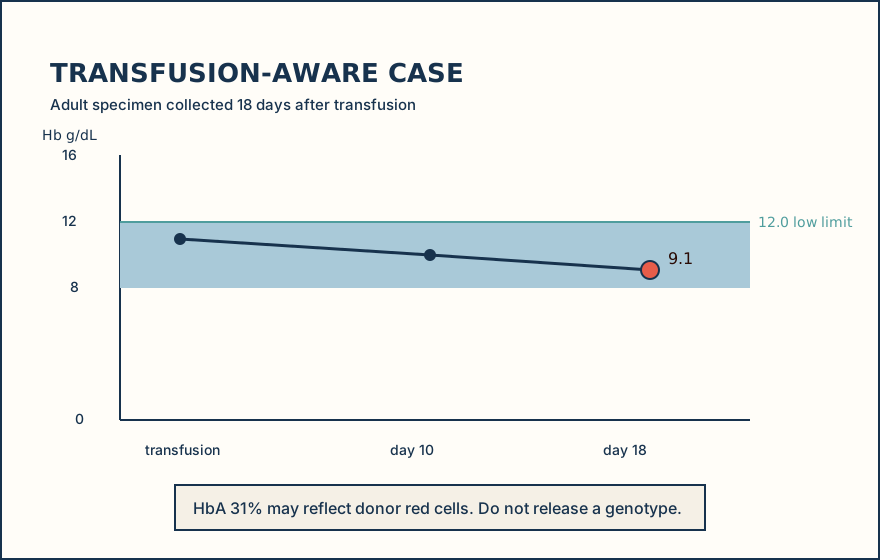
Start by holding the HbA fraction open as a question rather than assigning it to the patient. Donor red cells can mask a hemoglobinopathy or add a donor fraction after transfusion. The morphology and reticulocytosis are supportive evidence in context, not a molecular result. Release a bounded interpretation only after the specimen history and a complementary method are reviewed.
Illustrative drawing — this picture was drawn rather than captured.
| Finding | Result | Interpretive context |
|---|---|---|
| Hemoglobin | 9.1 g/dL | Low against 12.0–16.0 g/dL illustrative interval |
| MCV | 86 fL | 80–100 fL illustrative interval |
| Absolute reticulocytes | 210 × 10^9/L | 30–100 × 10^9/L illustrative interval; high |
| Smear | Polychromasia, target cells, occasional sickle forms, Howell-Jolly bodies | Supportive in context, not molecular |
| HPLC | HbA 31.0%; S-window 54.0%; HbF 12.0%; HbA2 3.0% | Fractions in method-specific windows |
| Transfusion | Red-cell transfusion 18 days earlier | HbA may include donor cells |
Knowledge checks
Reading and checks are open. Sign in only to save.
Knowledge check 1
Section status
Finish this section
Reading and checks are open. Sign in only to save.
The module finishes after every required section is marked done and every check in those sections is correct.