Required section · Section 5 of 6
Learner decision: what is supported and what is not
The adult male in this case has saturation above 50% and ferritin above 300 micrograms/L, which meets EASL biochemical-suspicion context. Normal C-reactive protein makes acute inflammation less supported, while mild liver injury remains relevant. The pattern supports an iron-overload workup and clinical correlation, not a laboratory diagnosis of organ damage.
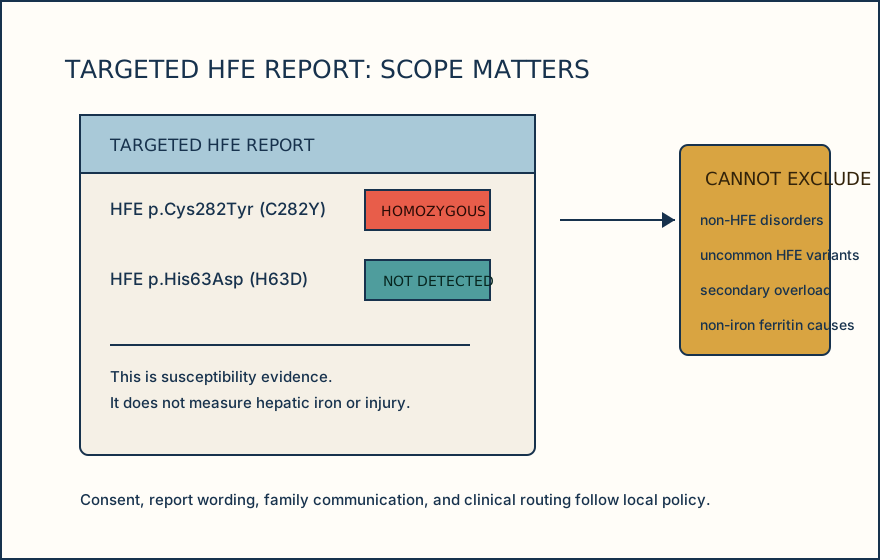
C282Y homozygosity is the common genotype most associated with HFE-related hemochromatosis, particularly in people of northern European ancestry. C282Y/H63D compound heterozygosity and H63D homozygosity have much lower penetrance, so genotype alone does not establish clinically important overload. A targeted common-variant assay cannot exclude non-HFE hereditary disorders, uncommon HFE variants, secondary overload, or non-iron causes of high ferritin.
The defensible laboratory action is to release verified iron and genetic results using approved local genetic-report language and route clinical correlation under local policy. MRI or biopsy may assess tissue iron or liver pathology if clinically considered, but neither is a laboratory iron-panel result. Communicate susceptibility, assay limits, and the need for clinical correlation without implying a treatment decision.
Illustrative drawing — this picture was drawn rather than captured.
Knowledge checks
Reading and checks are open. Sign in only to save.
Knowledge check 1
Section status
Finish this section
Reading and checks are open. Sign in only to save.
The module finishes after every required section is marked done and every check in those sections is correct.