Required section · Section 5 of 6
Choose the bounded release action
For this case, first make the minimum correlation of objective morphology, CBC, analyzer flag, specimen limitations, and platelet verification; then perform the required review and promptly route the high-concern finding. Capture a representative image concurrently when available, without delaying that route. The patient report contains objective morphology and applicable limitations. The designated review record, image metadata, and communication record are internal records. The communication recipient, time target, notification threshold, reviewer role, and any APL-specific route are locally controlled.
For CAP-accredited laboratories, the CAP critical-result checklist requires immediate notification of responsible clinical personnel and retention of notification records when a result meets that laboratory's designated critical-result criteria. The laboratory director, with clinicians served, defines the critical results and values for its patient population. For verbal critical-result communication, request and record read-back.
For electronic communication, an approved local route must document receipt confirmation by the intended responsible individual; a sent-message or delivery status alone is not confirmation. Record the date and time, communicator, recipient traceable to that person, result, communication method, and the receipt confirmation according to local process. Electronic receipt confirmation replaces a verbal read-back only when the approved electronic route has confirmed receipt. Escalate according to the controlled procedure and document the communication, not a speculative diagnosis.
Illustrative drawing — this picture was drawn rather than captured.
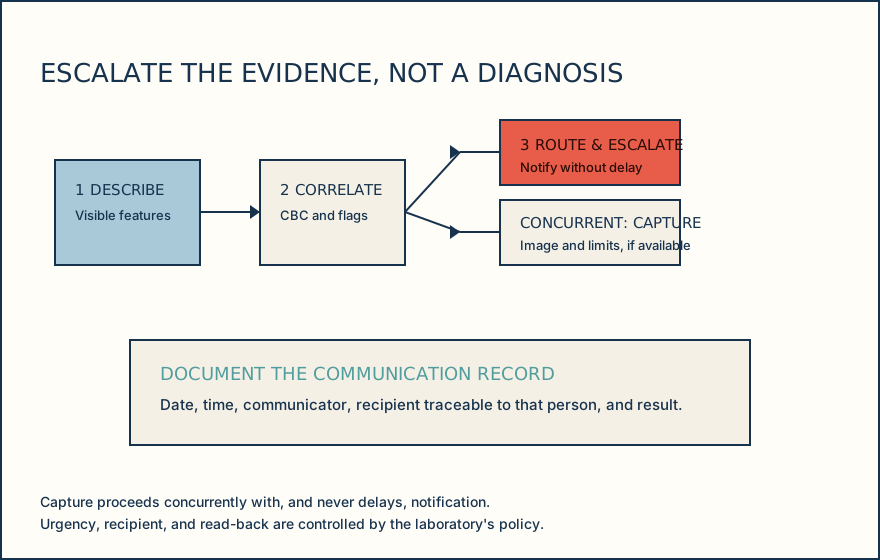
Ordering exercise
Place the required actions in the order that supports a defensible response to the high-concern film. Image capture is optional and may occur concurrently after correlation; it is not a gate before notification.
1. Optionally capture evidence concurrently
When available, retain a representative image and review metadata without delaying notification.
2. Route and communicate
Obtain designated review and promptly notify under local policy; retain the internal communication record.
3. Describe the morphology
State visible features and approximate population for the patient report.
4. Make the minimum correlation
Review CBC, analyzer information, specimen limitations, and platelet verification.
Knowledge checks
Reading and checks are open. Sign in only to save.
Knowledge check 1
Knowledge check 2
Knowledge check 3
Section status
Finish this section
Reading and checks are open. Sign in only to save.
The module finishes after every required section is marked done and every check in those sections is correct.