Required section · Section 2 of 6
Describe the cell before naming it
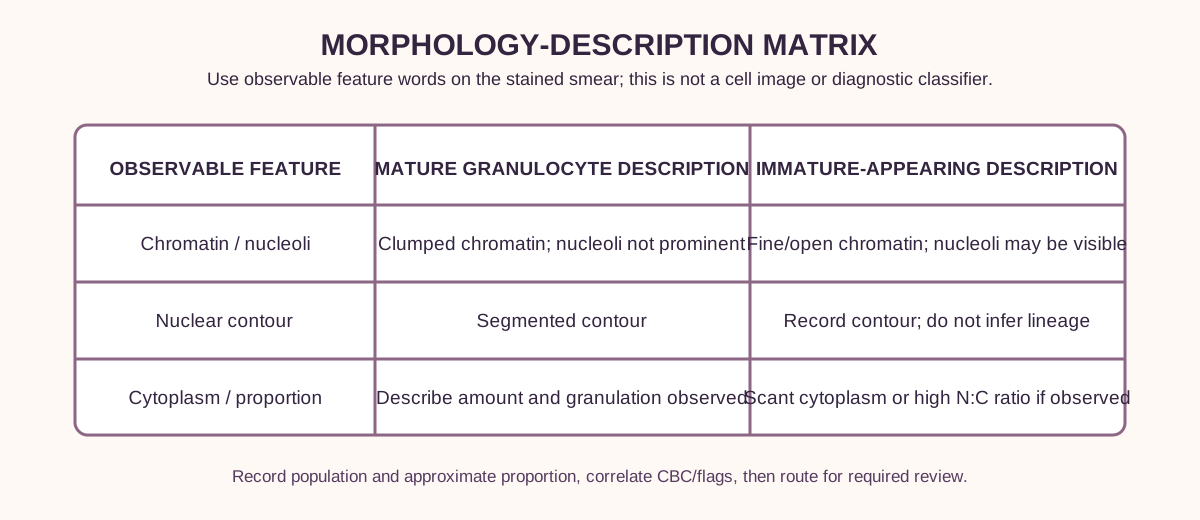
Chromatin texture, nucleoli, nuclear contour, cytoplasmic amount, granulation, and inclusions are separate observations. Fine or open chromatin and visible nucleoli support an immature appearance, but neither alone establishes blast lineage or leukemia. Record the population in which the feature occurs and its approximate proportion.
A high nuclear-to-cytoplasmic ratio means the nucleus occupies much of the cell. Asynchronous maturation means nuclear and cytoplasmic development do not appear coordinated. Both are useful descriptions that need CBC, smear, and review correlation.
A mature granulocyte usually has clumped chromatin and a segmented nuclear contour. An immature cell may have fine chromatin, nucleoli, and scant cytoplasm. These contrasts support a descriptive report, not a final classification. Use feature words first, then state the bounded interpretation.
Illustrative drawing — this picture was drawn rather than captured.
A repeatable description sequence for a suspicious leukocyte
Scan the field
Assess smear quality and whether the feature recurs in a coherent cell population.
Describe structure
Record chromatin, nucleoli, contour, cytoplasm, granulation, inclusions, and approximate proportion.
Correlate evidence
Compare the description with CBC values, analyzer flags, and relevant specimen limitations.
Route the finding
Use the controlled local review and escalation procedure without assigning an image-only disease diagnosis.
Knowledge checks
Reading and checks are open. Sign in only to save.
Knowledge check 1
Section status
Finish this section
Reading and checks are open. Sign in only to save.
The module finishes after every required section is marked done and every check in those sections is correct.