Required section · Section 2 of 6
Move from recognition to integrated resolution
Blast-like cells are immature-appearing cells, often with a high nuclear-to-cytoplasmic ratio, immature chromatin, and visible nucleoli. Myeloblasts may have fine chromatin, moderate cytoplasm, azurophilic granules, or Auer rods. Lymphoblasts can have scant agranular cytoplasm and variable nucleoli. Abnormal promyelocytes may be heavily granulated with irregular, folded, or bilobed nuclei and multiple or bundled Auer rods; less-granular or microgranular forms also occur. Reactive lymphocytes and other immature cells can overlap these appearances on a limited field, so morphology has meaningful limits.
An Auer rod supports myeloid differentiation when truly identified, but its absence does not exclude acute myeloid leukemia. Use a systematic smear description and preserve uncertainty until integrated studies are available. A qualified second review or escalation follows the validated local procedure; it is not a substitute for urgent communication when an urgent finding is present.
Flow cytometry can identify an abnormal population and support lineage and maturation assessment, but no single flow-cytometry blast gate—an analytical region used to enumerate a candidate population—or screening marker is definitive. Initial workup integrates morphology, flow cytometry, conventional cytogenetics, fluorescence in situ hybridization, or FISH, and molecular testing. Name the observed morphology and the concern, then route the specimen for studies that can resolve lineage and genetics.
Illustrative drawing — this picture was drawn rather than captured.
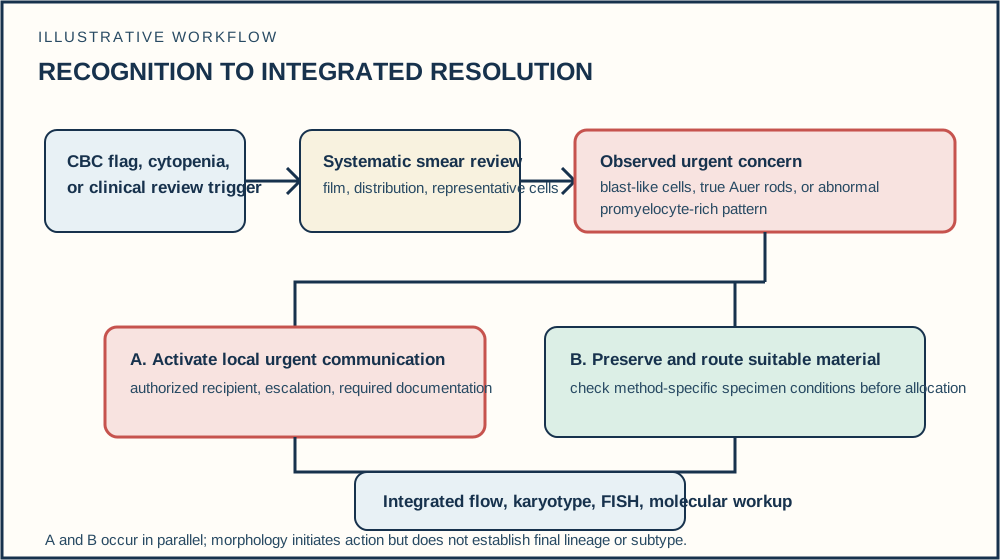
Use this sequence when a smear raises acute-leukemia concern.
Recognize the pattern
Correlate flags, counts, cytopenias, and smear findings without assigning a subtype.
Protect material and notify in parallel
Start the local urgent communication route while viable, unfixed material is allocated under the local acute-leukemia procedure; do not make one action wait for the other.
Resolve with integrated studies
Route morphology, flow, cytogenetics, FISH, and molecular results for integrated interpretation.
Knowledge checks
Reading and checks are open. Sign in only to save.
Knowledge check 1
Section status
Finish this section
Reading and checks are open. Sign in only to save.
The module finishes after every required section is marked done and every check in those sections is correct.