Required section · Section 3 of 6
Focused instruction
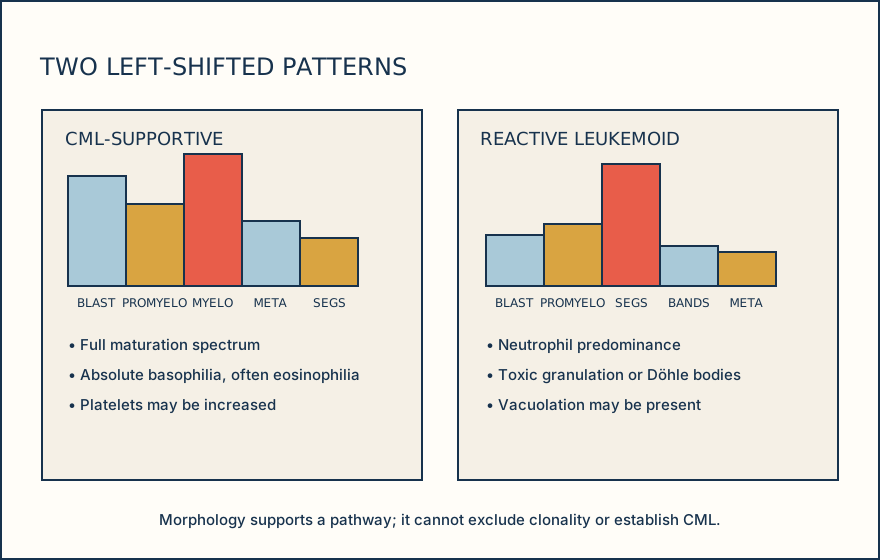
A reactive leukemoid pattern can also be left shifted. It more often shows neutrophil predominance with toxic granulation, Döhle bodies, or cytoplasmic vacuolation. Those reactive toxic changes argue toward inflammation or infection, but morphology alone cannot exclude a clonal process. Leukocyte alkaline phosphatase is historical context and is not modern confirmation.
CML is defined by BCR::ABL1, usually associated with t(9;22)(q34;q11), the Philadelphia chromosome. Cytogenetics, fluorescence in situ hybridization (FISH), and reverse-transcription polymerase chain reaction (RT-PCR) answer related but different questions. A cryptic rearrangement is a BCR::ABL1 rearrangement not visible by conventional chromosome banding. FISH can detect a rearrangement but does not identify the transcript or additional chromosomal abnormalities.
At diagnosis, bone marrow morphology and conventional chromosome banding are integrated with BCR::ABL1 testing. RT-PCR can use peripheral blood or marrow and identifies the transcript needed for follow-up. Common p210 transcripts are e13a2 and e14a2, historically b2a2 and b3a2. Report the detected transcript in current nomenclature and state the method limitation when common-transcript coverage cannot exclude an atypical fusion.
Illustrative drawing — this picture was drawn rather than captured.
Knowledge checks
Reading and checks are open. Sign in only to save.
Knowledge check 1
Knowledge check 2
Section status
Finish this section
Reading and checks are open. Sign in only to save.
The module finishes after every required section is marked done and every check in those sections is correct.