Required section · Section 5 of 6
Learner decision
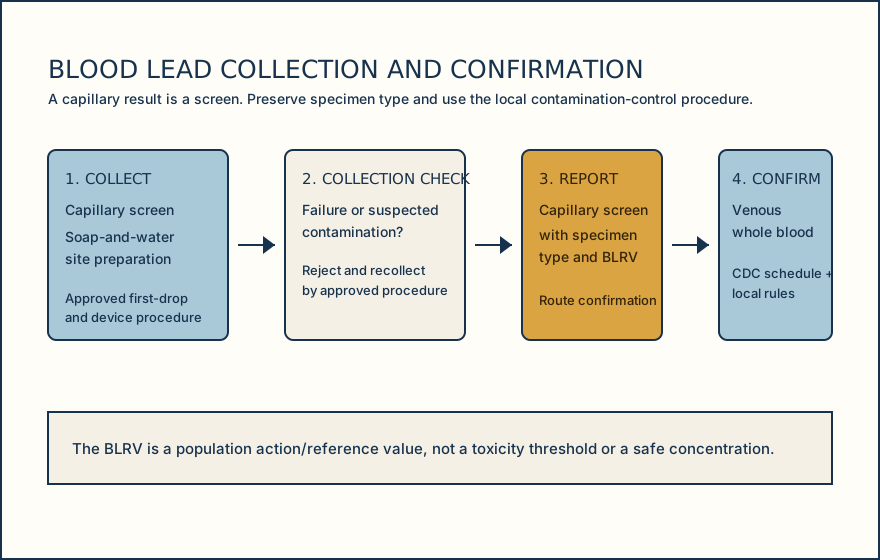
The capillary blood-lead screen in the case table is at or above the current CDC BLRV. The BLRV identifies children with higher exposure than most peers; it is not a safe concentration and not a toxicity threshold.
For an initial capillary result from 3.5 to 9 micrograms/dL, CDC recommends venous confirmation within 3 months. This interval is CDC guidance and must be applied with current jurisdictional or local rules. The laboratory reports the capillary result as a screen with specimen type, then supports venous confirmation and routes notification and reporting through policy.
Capillary collection can be contaminated. Apply the locally approved soap-and-water skin preparation, first-drop and collection-device procedure. Reject an inadequately collected or suspect specimen and recollect it; report the specimen type. A discordant venous result is the confirmed specimen-type result and does not identify why the capillary screen differed.
Release a capillary screen as a screen, preserve specimen type in the report, and route venous confirmation through the defined workflow.
Illustrative drawing — this picture was drawn rather than captured.
Ordering exercise
Put the laboratory actions in order after an initial capillary screen at or above the BLRV.
1. Obtain venous confirmation
For the CDC 3.5 to 9 micrograms/dL range, obtain confirmation within 3 months under current jurisdictional or local rules.
2. Release venous result
Release the validated venous whole-blood result through local reporting and notification policy.
3. Release the capillary screen
Report the measured capillary screen with specimen type and local workflow.
Knowledge checks
Reading and checks are open. Sign in only to save.
Knowledge check 1
Knowledge check 2
Knowledge check 3
Section status
Finish this section
Reading and checks are open. Sign in only to save.
The module finishes after every required section is marked done and every check in those sections is correct.