Required section · Section 1 of 6
Opening laboratory problem: a normal count can mislead
A 3-year-old has bruising and fatigue. K2-EDTA blood collected at 09:10 is received at 09:28 without clotting or analyzer interference flags. The DxH 900 CBC reports white blood cells 5.8 × 10^9/L, hemoglobin 7.8 g/dL, platelets 42 × 10^9/L, absolute neutrophil count (ANC) 0.8 × 10^9/L, and an immature-cell flag on the differential.
The total white count sits within the cited CALIPER study interval for this age; say it that way, not as 'normal,' because a study interval is not this laboratory's released reference range. Hemoglobin, platelets, and ANC all sit below their cited study intervals. The CBC itself, not the smear, establishes these three cytopenias: it is the analyzer counts of hemoglobin, platelets, and neutrophils that fall below interval.
The immature-cell flag is an analyzer trigger, not a diagnosis. It supports review by prompting a mandatory manual smear before release, but the flag has limits: it can be false-positive (triggered by a reactive left shift or artifact) or false-negative (missed at low blast burden). Only the smear resolves what the flag cannot: at 10:05, manual peripheral-smear review reports anemia and thrombocytopenia consistent with the CBC, plus a new finding the CBC cannot make — blasts, identified visually and quantified by manual differential at 2 of the 100 leukocytes counted (2%). A total count within interval does not erase two CBC-confirmed cytopenias and a smear-confirmed blast population.
The question is how age, developmental hemoglobin expression, marrow reserve, and prevalence change interpretation. Marrow disease can produce these cytopenias even with a WBC that is low or within interval: leukemic infiltration can crowd out normal trilineage production (myelophthisis) without necessarily raising the total circulating white count, so a low or in-range WBC never excludes marrow disease on its own. The CBC measures counts and indices, while the smear displays morphology. Neither result establishes lineage or a final leukemia classification.
Illustrative drawing — this picture was drawn rather than captured.
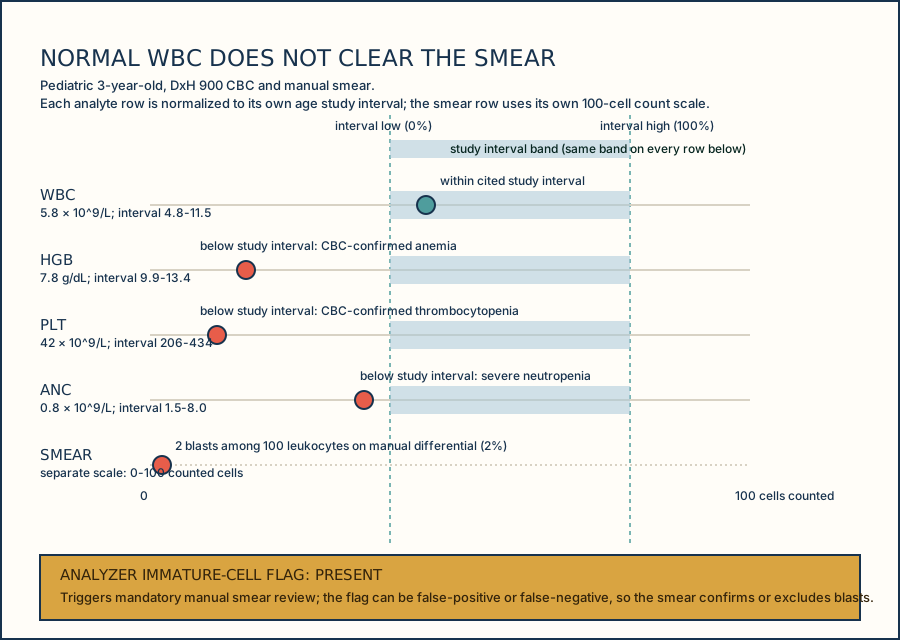
| Analyte or finding | Result | Age study interval or observation |
|---|---|---|
| WBC | 5.8 × 10^9/L | 4.8-11.5 × 10^9/L |
| Hemoglobin | 7.8 g/dL | 9.9-13.4 g/dL |
| Platelets | 42 × 10^9/L | 206-434 × 10^9/L |
| ANC | 0.8 × 10^9/L | 1.5-8.0 × 10^9/L |
| Immature-cell flag | Present | Analyzer trigger; requires mandatory manual smear review |
| Smear | 2 blasts among 100 leukocytes counted (2%) | Manual differential; manual denominator is 100 counted cells |
Knowledge checks
Reading and checks are open. Sign in only to save.
Knowledge check 1
Section status
Finish this section
Reading and checks are open. Sign in only to save.
The module finishes after every required section is marked done and every check in those sections is correct.