Required section · Section 5 of 6
Accept, reject, recollect, or qualify
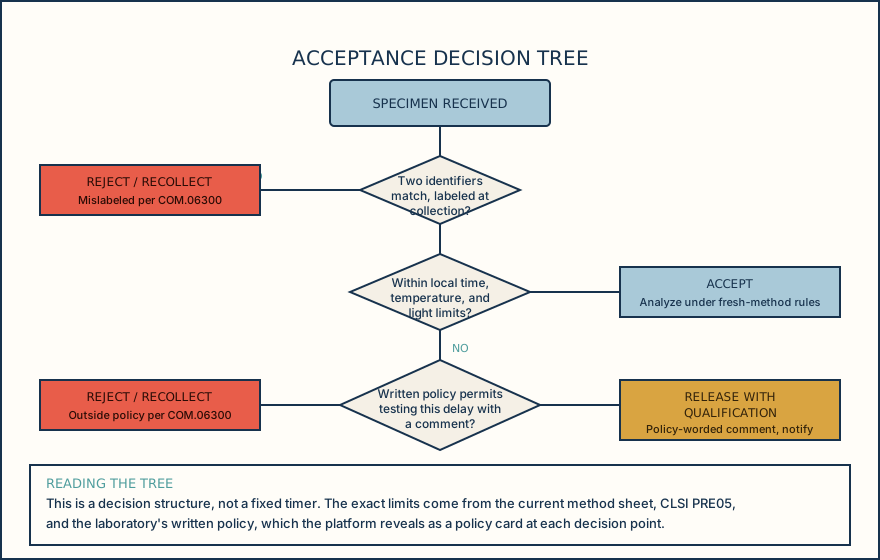
A receipt decision separates the analytical observations above from a judgment about specimen adequacy. Under 42 CFR 493.1242 and CLSI PRE05, that judgment resolves to one of a small set of actions: accept the specimen for testing, reject it and request a recollection, or, only where a written policy specifically allows it, release a result with a qualifying comment that documents the specimen's condition. CAP requires the laboratory to define and follow rejection criteria in writing and to record the disposition of any specimen tested despite a preanalytic problem, including notifying the clinician who ordered the test.
For this case, a policy that does not accept specimens over its defined age or storage limit for routine urinalysis calls for rejection and recollection: the specimen is turbid, past the strip method's 2-hour fresh-specimen window, unrefrigerated, unprotected from light, and unpreserved, all at once. A policy that permits testing with qualification under exactly these conditions would call for release with the specified comment language and clinician notification, not for silent reporting of the numbers as if the specimen were fresh.
What the decision does not rest on is the pH flag by itself, or the turbid appearance by itself. Either finding alone could have another explanation; it is the combination of elapsed time, storage condition, and light exposure, evaluated against the written policy, that supports rejection or qualification. A learner working this decision is expected to name the specific evidence, not just the final disposition.
State the specimen condition and the policy basis for the decision, not just the decision itself, because that statement is what the next reader relies on.
Illustrative drawing — this picture was drawn rather than captured.
Knowledge checks
Reading and checks are open. Sign in only to save.
Knowledge check 1
Knowledge check 2
Section status
Finish this section
Reading and checks are open. Sign in only to save.
The module finishes after every required section is marked done and every check in those sections is correct.