Required section · Section 2 of 6
What a Basic Semen Examination Actually Does
A basic semen examination is a fixed sequence: collect the specimen under defined conditions, let it liquefy, examine it macroscopically, then examine it microscopically for concentration, motility, vitality when indicated, and morphology, and finally write a report that states the method used. The World Health Organization's sixth-edition laboratory manual for the examination and processing of human semen (2021) is the current reference procedure manual for this sequence, and most clinical laboratories validate their own written procedures against it. Nothing about the biology changes between visits, but the pre-analytic conditions change every single time, which is why the same patient can produce meaningfully different results on two different days.
Two pre-analytic requirements shape everything downstream. First, the World Health Organization recommends 2 to 7 days of ejaculatory abstinence before a diagnostic collection, because too little or too much abstinence shifts volume and concentration. Second, the specimen has to reach analysis intact and on time. CAP requires that every semen specimen arrive with its collection method, container type, days of abstinence, any collection or transport problem, and the time of receipt and analysis documented, because each of those facts can explain an otherwise unexplained result.
The diagram below lays out the fixed sequence: collection, transport and receipt, macroscopic exam, microscopic exam, and report. Two steps carry hard time constraints: the World Health Organization's window for transport and analysis (roughly 30 to 60 minutes after collection) and CAP's requirement that motility percent and progression be evaluated within one hour of collection, with any exception noted on the report. Before you touch a slide, confirm the collection history and the clock; both are inputs to the result, not paperwork around it.
Illustrative drawing — this picture was drawn rather than captured.
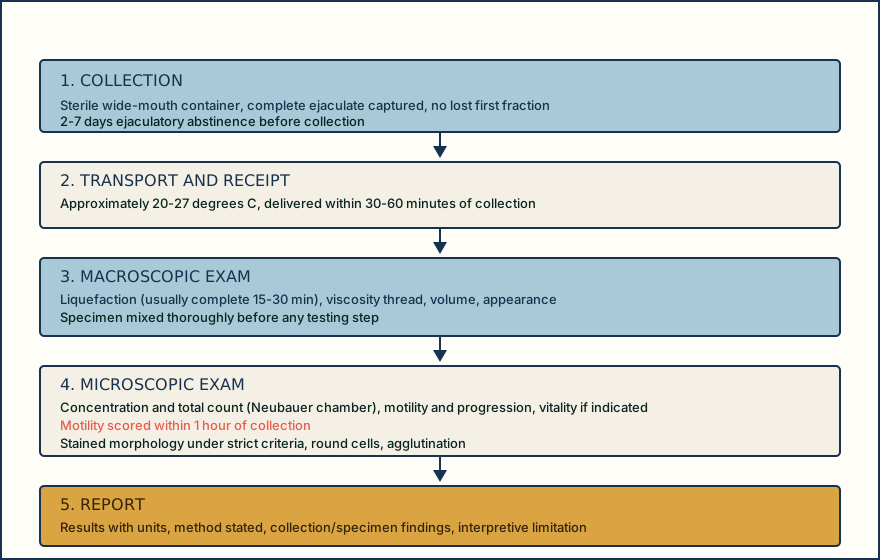
The fixed sequence of a basic semen examination, from collection through report.
Collection
Patient collects the complete ejaculate into a sterile container after 2 to 7 days of abstinence, per written self-collection instructions.
Transport and receipt
Specimen is kept within this laboratory's validated 20 to 27 degrees C transport range and reaches the laboratory with its collection history documented, ideally within 30 to 60 minutes.
Macroscopic exam
Laboratory confirms liquefaction, then records volume, appearance, and viscosity after the specimen is mixed thoroughly.
Microscopic exam
Laboratory determines concentration and total sperm number, motility and progression, vitality if indicated, and stained strict-criteria morphology.
Report
Results are released with units, the method and classification system stated, and any collection or specimen-adequacy finding noted.
Knowledge checks
Reading and checks are open. Sign in only to save.
Knowledge check 1
Section status
Finish this section
Reading and checks are open. Sign in only to save.
The module finishes after every required section is marked done and every check in those sections is correct.