Required section · Section 5 of 6
The potassium result: where do you look first?
Return to the opening case. The patient's potassium result is 6.8 mmol/L. QC is in range for both levels, calibration on the potassium electrode is current, and the instrument raised no error flag on this specimen. The event log below lays out the run in the order it happened, so the 'no QC failure' premise is something you can read directly rather than take on faith.
The collection notes matter as much as the analyzer output. This specimen was drawn with a small-gauge needle after a difficult venipuncture, and there was a delay before it reached the laboratory. Both are preanalytical circumstances, meaning they happened before the specimen ever reached the analyzer, and both are recognized mechanisms for hemolysis: rupture of red cells that releases their high intracellular potassium content into the serum or plasma, producing a falsely elevated potassium result that has nothing to do with the patient's true blood chemistry. This is distinct from in-vivo hemolysis, a real patient process that can itself cause true hyperkalemia; distinguishing the two is a laboratory and clinical judgment made from history, appearance of the specimen, and other findings, not a rule that settles the question in the abstract.
Two paths do not answer the question. Rerunning quality control will not help; QC already passed, and QC tests the system, not this specimen's integrity. A formula-based correction of the potassium value using a hemolysis index is not considered reliably accurate and should not generally substitute for recollection and repeat testing when the patient is clinically stable enough to allow it; mathematically adjusting the number is not the same as knowing the true value.
What does answer the question is checking specimen integrity first: was this specimen visibly hemolyzed, and does the collection history support a preanalytical explanation. If hemolysis is the leading, testable explanation, the defensible action is to request or collect a fresh specimen, collected without the same difficulty, and repeat the potassium measurement before treating 6.8 mmol/L as a true reflection of this patient's blood chemistry. This action is preferred because it produces a directly comparable, trustworthy number rather than an estimate.
Illustrative drawing — this picture was drawn rather than captured.
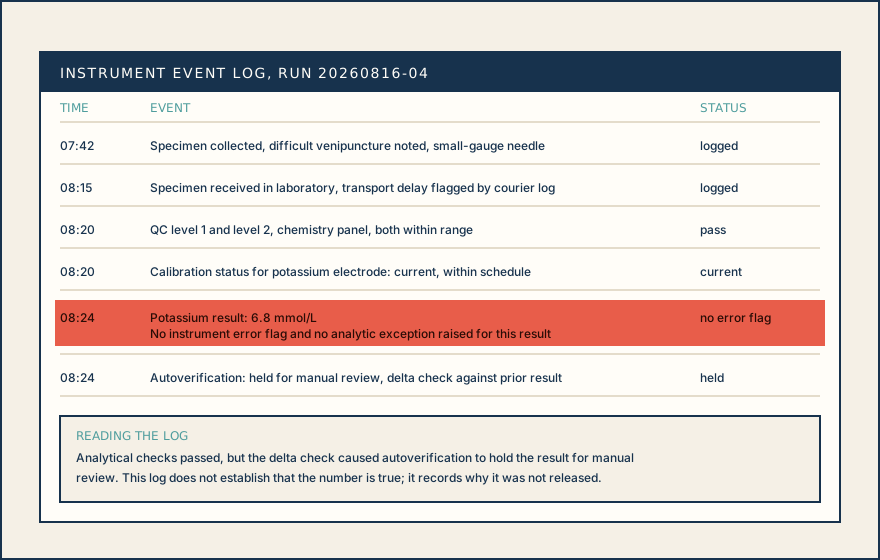
| Time | Event | Status |
|---|---|---|
| 07:42 | Specimen collected, difficult venipuncture, small-gauge needle | logged |
| 08:15 | Specimen received in laboratory, transport delay noted | logged |
| 08:20 | QC level 1 and level 2, chemistry panel | pass |
| 08:20 | Calibration status, potassium electrode | current |
| 08:24 | Potassium result 6.8 mmol/L | no error flag |
| 08:24 | Autoverification | held for manual review |
Knowledge checks
Reading and checks are open. Sign in only to save.
Knowledge check 1
Knowledge check 2
Section status
Finish this section
Reading and checks are open. Sign in only to save.
The module finishes after every required section is marked done and every check in those sections is correct.