Required section · Section 5 of 6
Choose the bounded laboratory action
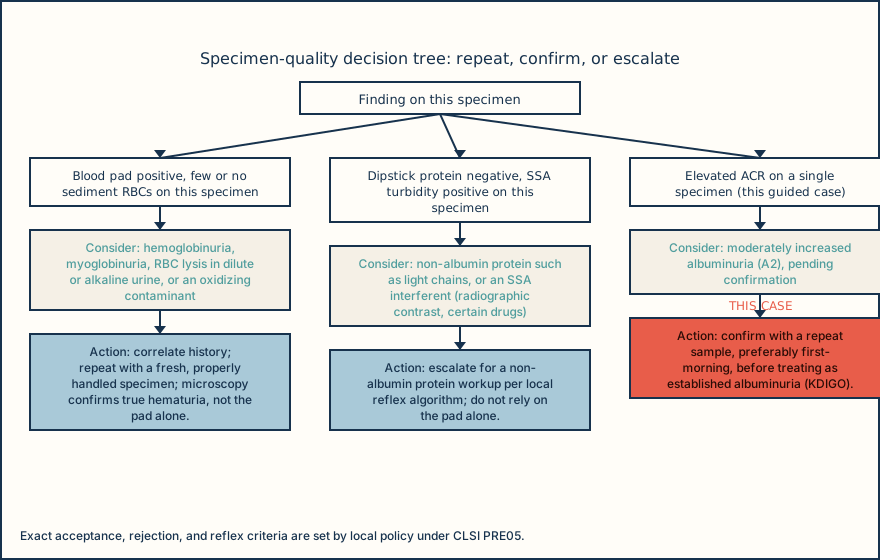
Identify G3a/A2, directionally concordant ACR and PCR, microscopic RBC corroboration, and granular casts before naming an explanation. Protein 1+ alone is not the deciding quantitative result. Absence of an RBC cast does not cancel the remaining evidence.
A 2+ blood pad with 0–2 RBC/hpf under the local microscopy rule is discordant and raises hemoglobin, myoglobin, lysed cells, or interference; it does not confirm intact-RBC hematuria. Negative dipstick with SSA turbidity would raise non-albumin protein or SSA interference. Neither is the leading explanation for this case.
Choose repeat first-morning ACR confirmation and laboratory flagging for correlation under local policy. Do not diagnose a disease or assert persistence from one specimen. Choose the next check that reduces actual uncertainty.
Illustrative drawing — this picture was drawn rather than captured.
Ordering exercise
Place the reasoning steps in defensible sequence.
1. Choose action
Repeat ACR and flag per policy.
2. State the bounded pattern
Avoid diagnosis.
3. Correlate results
Compare ratios, strip, and sediment.
4. Assign G3a and A2
Classify eGFR and ACR.
Knowledge checks
Reading and checks are open. Sign in only to save.
Knowledge check 1
Section status
Finish this section
Reading and checks are open. Sign in only to save.
The module finishes after every required section is marked done and every check in those sections is correct.