Required section · Section 3 of 6
Specimen type, method limits, and co-oximetry
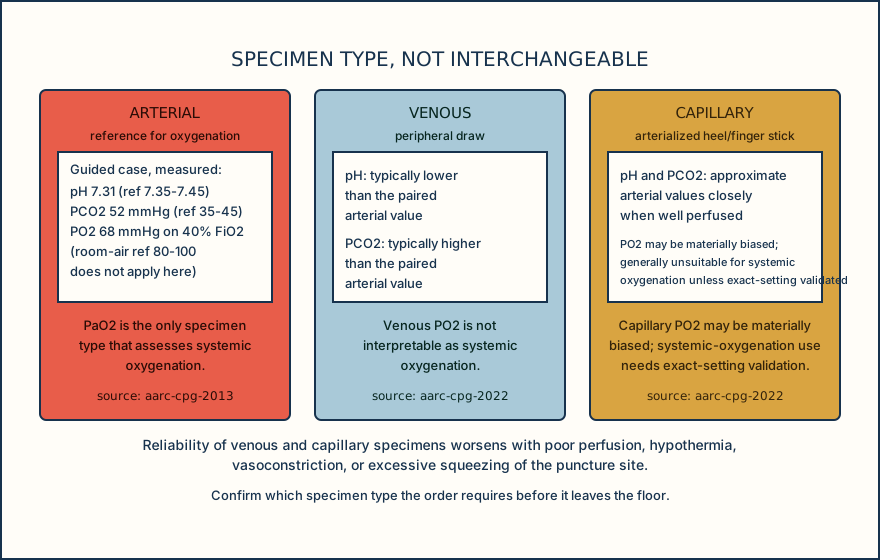
Arterial PaO2 is the reference measurement for systemic oxygenation. Venous and capillary specimens are not interchangeable substitutes for judging how well a patient is oxygenating, even when they are convenient to draw. Peripheral venous blood typically shows a lower pH and a higher PCO2 than the paired arterial value, because venous blood carries the carbon dioxide picked up from tissue metabolism and has already given up some of its oxygen. Venous PO2 does not describe systemic oxygenation and should not be used that way.
In a well-perfused neonate, arterialized capillary pH and PCO2 can approximate arterial values, which is why capillary sampling is used in that population. Capillary PO2 may be materially biased and is generally unsuitable for systemic-oxygenation decisions unless validated for the exact population, perfusion state, and configuration. Capillary and venous reliability worsens with poor peripheral perfusion, hypothermia, vasoconstriction, or excessive squeezing.
Co-oximetry is a separate measurement system from the pH/PCO2/PO2 electrode module. It uses multiwavelength spectrophotometry on a hemolyzed whole-blood aliquot to directly measure individual hemoglobin fractions: oxyhemoglobin, deoxyhemoglobin, carboxyhemoglobin (COHb), and methemoglobin (MetHb). This matters because a calculated oxygen saturation derived from PO2 assumes a normal oxygen-hemoglobin relationship. When carboxyhemoglobin, methemoglobin, or an abnormal hemoglobin variant is present in meaningful amounts, that assumption breaks and the calculated saturation can mislead; a co-oximetry-measured fractional value is needed instead. Wavelength count and the exact fraction menu are platform-specific and should be confirmed against the analyzer's current instructions for use.
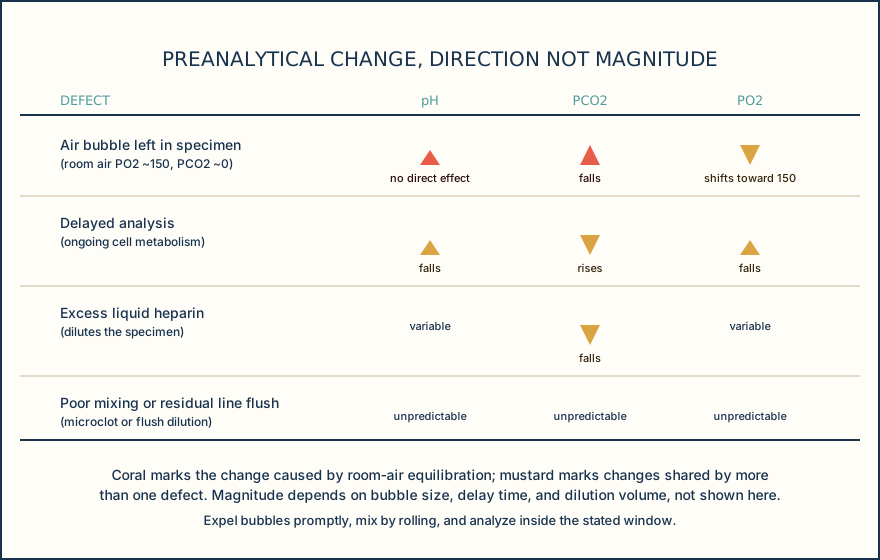
Specimen handling changes results before the analyzer ever sees the true value. An air bubble left in contact with the specimen drives gas exchange toward room-air composition, roughly PO2 150 mmHg and PCO2 near 0 mmHg; PCO2 nearly always falls, and PO2 moves toward 150 mmHg, rising if the true value is below that and falling if it is already above it. A visible bubble should be expelled promptly after collection, not mixed into the specimen. Ongoing cellular metabolism in a specimen that sits before analysis consumes oxygen and generates carbon dioxide, so PO2 falls, PCO2 rises, and pH falls the longer the delay runs. For the named local plastic-syringe workflow, the specimen is analyzed within that laboratory's validated syringe/specimen/analyzer window; this is not a universal blood-gas rule.
Excess liquid heparin in the collection syringe dilutes the specimen and can falsely lower PCO2, bicarbonate-related calculations, and electrolyte concentrations; dry, electrolyte-balanced heparin is preferred specifically to minimize this dilution effect. Inadequate mixing after collection can leave heparin unmixed with blood, risking microclot formation and an unrepresentative gas or electrolyte distribution within the sample. Drawing from an indwelling arterial line requires discarding an adequate flush or dead-space volume first; residual flush solution or heparinized saline otherwise dilutes the specimen and biases results toward the flush composition rather than the patient's blood.
Illustrative drawing — this picture was drawn rather than captured.
Illustrative drawing — this picture was drawn rather than captured.
| Defect | pH | PCO2 | PO2 |
|---|---|---|---|
| Air bubble not expelled | no direct effect | falls | shifts toward about 150 mmHg |
| Delayed analysis (cell metabolism) | falls | rises | falls |
| Excess liquid heparin dilution | variable | falls | variable |
| Poor mixing or residual line flush | unpredictable | unpredictable | unpredictable |
Knowledge checks
Reading and checks are open. Sign in only to save.
Knowledge check 1
Knowledge check 2
Knowledge check 3
Knowledge check 4
Knowledge check 5
Section status
Finish this section
Reading and checks are open. Sign in only to save.
The module finishes after every required section is marked done and every check in those sections is correct.