Required section · Section 2 of 6
Why an order of draw exists at all
The order of draw exists to control additive carryover, not to match tube colors. A trace amount of blood, and whatever additive it carries, can travel forward into the next tube through the needle, the tubing, or the collection device hub. If that carryover additive is incompatible with the next tube's test, the next result is compromised before it is ever analyzed.
The current CLSI (Clinical and Laboratory Standards Institute) sequence is blood culture or sterile collection first, then citrate, then serum, then heparin, then EDTA (ethylenediaminetetraacetic acid), then a fluoride or oxalate glycolytic inhibitor tube last. This order holds whether the collection uses a syringe, a tube holder, or a preevacuated tube system; the device changes, the additive logic does not.
The clearest failure mode is a serum tube's clot activator carrying into a citrate coagulation tube ahead of it. Clot activator promotes clotting, and even a trace amount reaching a citrate tube can alter the plasma-based coagulation result that tube is meant to produce. This is why serum is sequenced after citrate rather than before it.
Not every additive in a laboratory's tube inventory appears in the core sequence above. When a tube carries an additive that is not explicitly listed, it is placed by reasoning through how that additive could alter whatever specimen is drawn immediately after it, not by matching it to a cap color chart.
Think in additive classes, not in cap colors, and you can reason through a device or vendor change without relearning the whole sequence.
Illustrative drawing — this picture was drawn rather than captured.
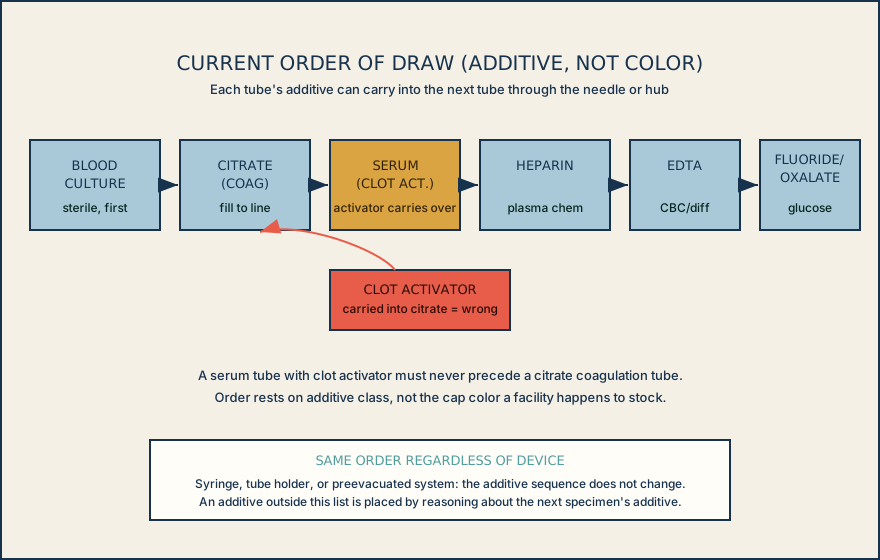
Current venous order of draw by additive class
Blood culture or sterile collection
Drawn first, before any additive tube, to keep the culture bottle free of additive contamination and to protect sterility.
Citrate (coagulation)
Drawn next and filled to the manufacturer's line so the blood-to-citrate ratio that plasma-based coagulation testing depends on is preserved.
Serum, including clot activator
Follows citrate. Its clot activator must never reach a citrate tube ahead of it, which is why serum is sequenced after coagulation collection.
Heparin
Plasma chemistry collection follows serum in the additive sequence.
EDTA
Whole blood collection for complete blood count and differential follows heparin.
Fluoride or oxalate glycolytic inhibitor
Drawn last in the core sequence; the glycolytic inhibitor protects glucose stability and does not need to precede the other additive classes.
Knowledge checks
Reading and checks are open. Sign in only to save.
Knowledge check 1
Knowledge check 2
Knowledge check 3
Section status
Finish this section
Reading and checks are open. Sign in only to save.
The module finishes after every required section is marked done and every check in those sections is correct.