Required section · Section 3 of 6
Building the risk assessment and choosing controls
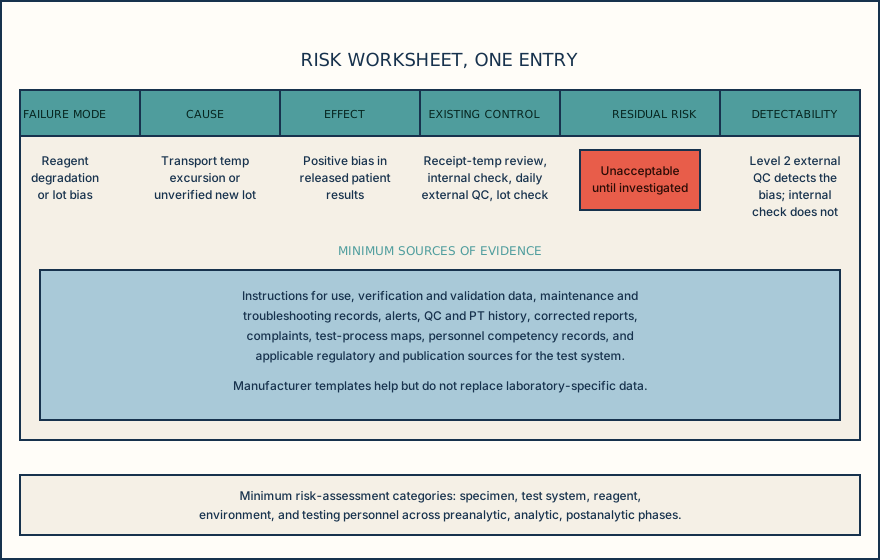
A risk assessment uses laboratory-specific evidence: instructions for use, verification data, maintenance and troubleshooting records, alerts, QC and PT history, corrected reports, complaints, process maps, and competency records. Record the failure mode, likely cause, effect, safeguards, remaining risk, and chance to detect it before it reaches a patient result.
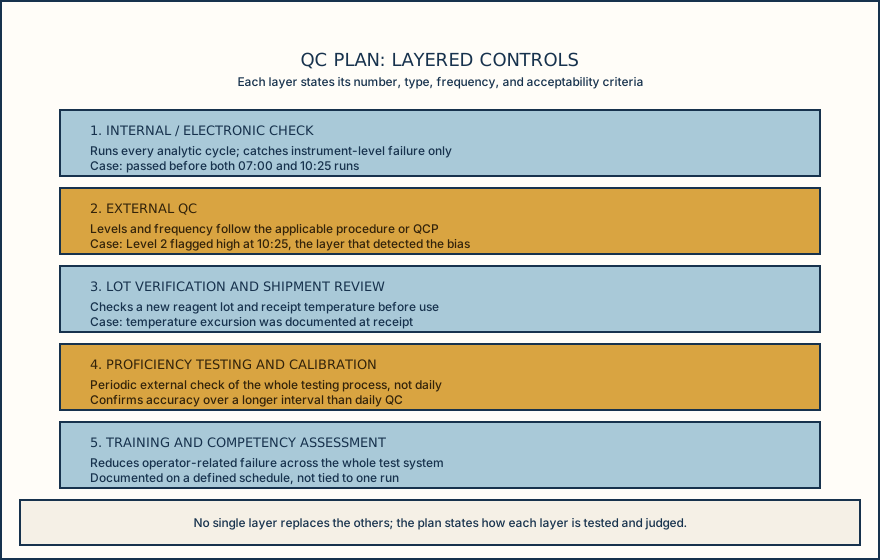
Build the QCP from the risks actually found. Internal checks, external controls, PT, calibration or maintenance, and competency are complementary layers; select their type, frequency, and levels from the applicable procedure or QCP and the evidence for this test system. No layer substitutes for a control that can detect the relevant failure sooner.
Before using a QCP, the laboratory director must sign and date the required approval without improper delegation. If the approval is missing, unsigned, or improperly delegated, do not use the QCP until the required approval is documented.
Choose a control because it can catch the stated failure in time, then document the trigger that makes the laboratory reassess the plan.
Illustrative drawing — this picture was drawn rather than captured.
Illustrative drawing — this picture was drawn rather than captured.
| Category | Example finding recorded |
|---|---|
| Specimen | Whole-blood specimen stability and mixing before loading on the analyzer |
| Environment | Refrigerator and courier temperature control for controls and reagent |
| Reagent | New lot verification and shipment temperature review before use |
| Test system | Internal electronic check scope; what it can and cannot detect |
| Testing personnel | Training and competency records for staff loading a new reagent lot |
Knowledge checks
Reading and checks are open. Sign in only to save.
Knowledge check 1
Knowledge check 2
Knowledge check 3
Section status
Finish this section
Reading and checks are open. Sign in only to save.
The module finishes after every required section is marked done and every check in those sections is correct.