Required section · Section 5 of 6
Decide what the risk assessment missed and what the plan needs now
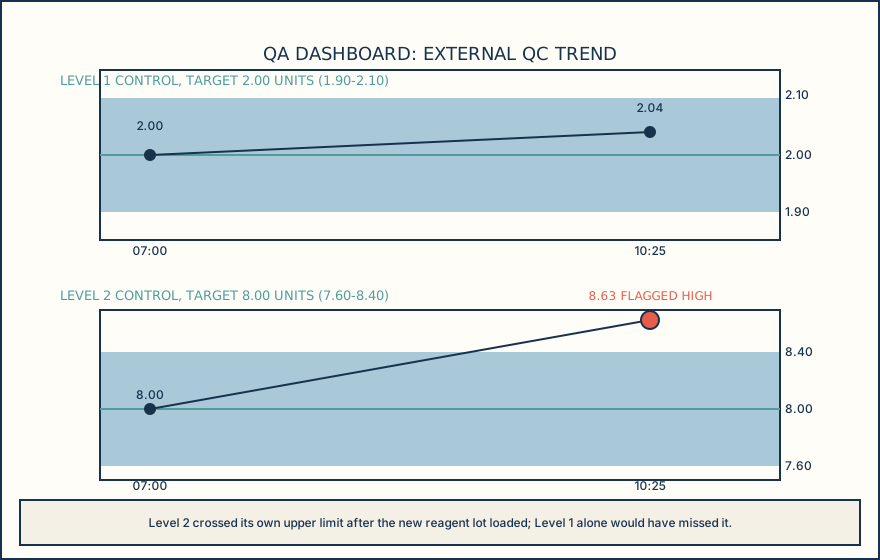
The laboratory's existing risk entry for this test system listed receipt-temperature review, the internal analyzer check, daily external QC, lot verification, and maintenance records as existing controls. The event still reached a flagged Level 2 result before it was caught, and only after a new lot was already loaded and used. Your task is to work through what a reassessment of this entry should change, using only what the case and the plan above actually show.
First, decide whether the gap is a missing hazard, a missing control, or a control that exists but runs too late to matter. The receipt-temperature review already exists and the excursion was documented, so the hazard was seen; the question is whether verification of a new lot happens before or after it goes into patient testing. Second, decide which layer of control should be strengthened, and why that layer specifically, based on where in the timeline the failure could still reach a patient result. Third, state a measurable trigger, a concrete condition tied to this event, that would force this risk assessment and QCP to be reviewed again, not just this one corrective action closed out.
A reassessment is only useful if it is specific. "Improve reagent handling" is not a trigger; "require lot verification against control material before a new lot is used on patient specimens, whenever a documented temperature excursion occurs during shipment" is a trigger, because it names the condition and the action. The same standard applies to the ongoing quality-assessment side: a QA monitor that says "review QC periodically" tells a reader nothing about when review happens or who owns it. A trigger you cannot act on the next time it fires is not a trigger, it is a hope.
Illustrative drawing — this picture was drawn rather than captured.
Ordering exercise
Put the laboratory's response to the flagged 10:25 Level 2 control in the order it actually has to happen.
1. Reassess the risk assessment and QCP
Decide whether the control frequency, shipping check, or lot-verification step needs to change so the same gap does not recur.
2. Evaluate results back to the last acceptable run
Review patient results from the unacceptable run and every run since the last acceptable control run for possible impact.
3. Investigate reagent storage and lot verification
Use the corrective-action procedure to look at the courier temperature record and the new lot's verification status.
4. Hold patient testing on the affected run
Stop releasing results from the run with the unacceptable Level 2 control before doing anything else.
Knowledge checks
Reading and checks are open. Sign in only to save.
Knowledge check 1
Section status
Finish this section
Reading and checks are open. Sign in only to save.
The module finishes after every required section is marked done and every check in those sections is correct.