Required section · Section 2 of 6
Three parts of an individualized quality control plan
An IQCP is a locally evidenced alternative quality-control plan, not an automatic reduction in controls. It links a risk assessment, a written QCP, and ongoing quality assessment.
The risk assessment identifies how the test system can fail; the QCP records controls that reduce those risks, including their documented timing and acceptance criteria; quality assessment monitors whether the plan works and triggers review.
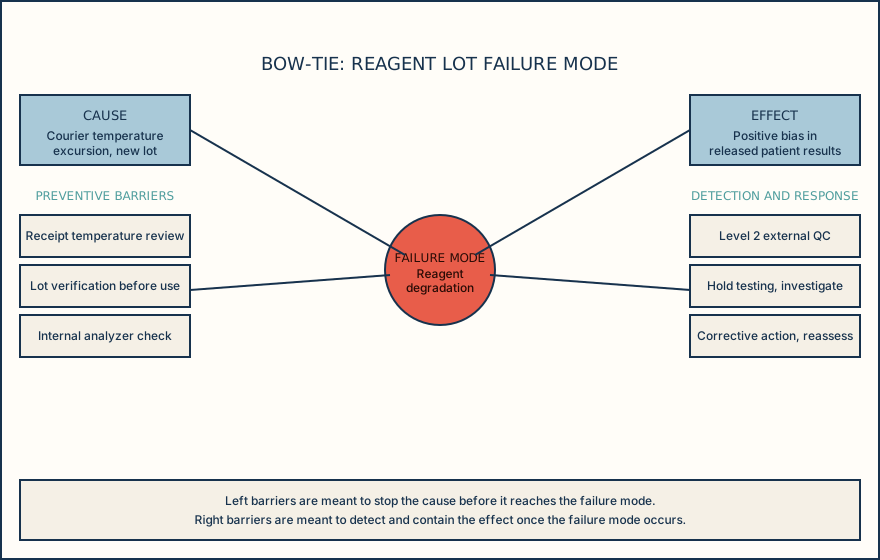
Confirm current jurisdiction and accreditor applicability before adopting the plan. The opening reagent-lot event shows why the three parts must work together: identify the lot-change risk, set controls that can detect it in time, and reassess the plan after a failure.
Illustrative drawing — this picture was drawn rather than captured.
The three connected parts of an individualized quality control plan, in the order a laboratory builds and then maintains them.
Risk assessment
Gather laboratory-specific evidence and identify failure modes across specimen, environment, reagent, test system, and testing personnel, through preanalytic, analytic, and postanalytic phases.
Quality control plan
Select and document layered controls, stating the number, type, frequency, and acceptability criteria that address the identified risks, at least as stringent as the manufacturer's instructions.
Quality assessment
Monitor on an ongoing basis whether the plan is actually detecting and controlling failures, and document any change that forces the risk assessment to be revisited.
Knowledge checks
Reading and checks are open. Sign in only to save.
Knowledge check 1
Knowledge check 2
Knowledge check 3
Section status
Finish this section
Reading and checks are open. Sign in only to save.
The module finishes after every required section is marked done and every check in those sections is correct.