Required section · Section 3 of 6
Subtypes, Limits, and the Fume-Hood Boundary
Class II BSCs come in subtypes, A1, A2, B1, B2, and C1, that differ mainly in how much air they recirculate inside the cabinet versus exhaust outdoors, and in whether they are ducted at all. That difference matters because it determines whether a given Class II cabinet is suitable for work involving small quantities of volatile toxic chemicals or trace radionuclides in addition to biological material; an A-type cabinet that recirculates most of its air is not built for that combination, while a ducted B-type may be, depending on the manufacturer's specification and local exhaust design. Do not assume every Class II cabinet handles chemical work; check the specific unit's rating before using it for anything beyond biological material.
A chemical fume hood is designed to capture and exhaust volatile chemical vapor to protect the worker from chemical exposure. It is not a certified biological containment device, and it does not give the sterile, particulate-controlled work zone that a BSC or clean bench provides.
OSHA's laboratory standard (29 CFR 1910.1450) does not set one fixed face-velocity number for a fume hood; instead it requires the laboratory's Chemical Hygiene Plan to define how hoods are tested, what counts as acceptable performance for that hood, and what staff do if performance fails. Working guidance under that standard is consistent across sites even without a single federal number: verify the hood is running before use, keep the sash at the designated working height, keep your head outside the hood opening, do not block baffles or slots with containers, and close the sash when the hood is not in use.
Inside a Class II BSC, an open flame is not an approved way to sterilize a loop or anything else. A flame generates heat and turbulence that disrupt the directional airflow pattern the cabinet depends on, and it can damage the HEPA filter. Human blood, body fluids, and unfixed tissue are commonly handled under BSL-2-level practices in clinical laboratories when the presence of a specific pathogen is not known, because the specimen is treated as potentially infectious by default; that is a practice-level default, not a substitute for a documented risk assessment when a specific organism is identified or suspected.
Centrifugation of specimens that may contain infectious material should use sealed rotors or safety cups. When the risk assessment calls for it, the sealed cup or rotor should be loaded, unloaded, and opened inside a certified BSC rather than out in the open laboratory.
A Class II BSC must be certified by a qualified field certifier at installation, after every move, after HEPA/ULPA filter replacement or major repair affecting airflow or containment, after a change to an externally ducted cabinet's exhaust connection, and at minimum every 12 months, using NSF/ANSI 49 field-certification procedures. A cabinet with expired or failed certification should be pulled from service for the affected work until it is corrected and successfully recertified; typical annual certification checks inflow velocity, downflow velocity and uniformity, HEPA leak integrity, airflow smoke pattern, and sash/alarm function.
If the specimen might be infectious, the device must be a certified BSC rated for that work, not a fume hood, not a clean bench, and never open flame.
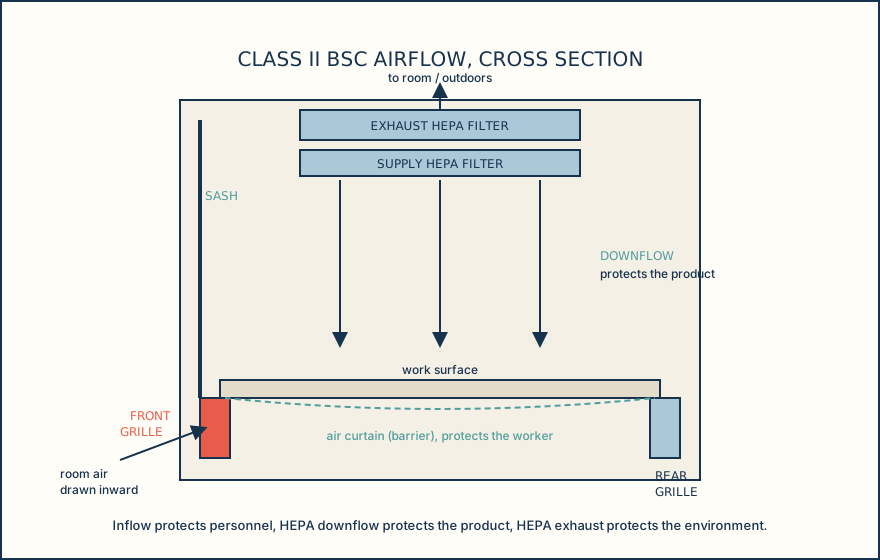
Illustrative drawing — this picture was drawn rather than captured.
| Trigger | Requirement |
|---|---|
| Installation | Field certification before the cabinet is placed in service |
| Relocation or move | Re-certification before the cabinet is used again at the new location |
| Filter replacement or major repair | Re-certification after any work affecting airflow or containment |
| Routine interval | Re-certification at least every 12 months per NSF/ANSI 49 |
Knowledge checks
Reading and checks are open. Sign in only to save.
Knowledge check 1
Knowledge check 2
Section status
Finish this section
Reading and checks are open. Sign in only to save.
The module finishes after every required section is marked done and every check in those sections is correct.