Required section · Section 1 of 6
The alarm that stops a transfer
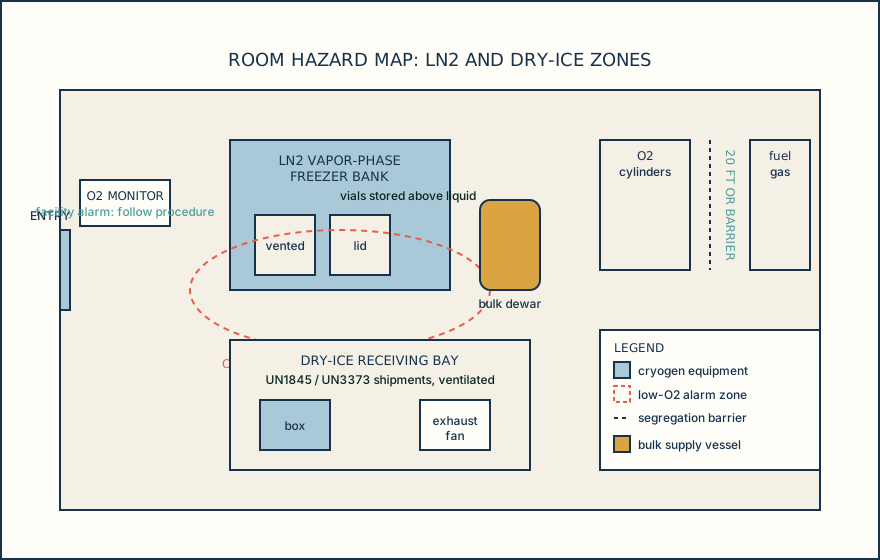
It is 08:13 in the specimen-receiving room. A technologist is fifteen minutes into a routine liquid nitrogen (LN2) top-off of the walk-in vapor-phase freezer bank from a bulk dewar. The fixed oxygen (O2) monitor at the room entry, which read a normal 20.9% O2 at 07:52, now reads 19.3% and the audible low-oxygen alarm has activated. Nothing in the room looks different. There is no smoke, no smell, no visible leak. The only evidence is a number on a wall display and a siren.
This is the bench question for compressed gases and cryogens: pressure, extreme cold, expansion, and displaced oxygen do not announce themselves the way a fire or a chemical spill does. A cylinder can fail catastrophically from stored pressure alone. A cryogen boiling off in a closed room can drop the breathable oxygen fraction low enough to impair judgment before a person notices anything is wrong. A sealed vial that spent time in liquid nitrogen can be carrying trapped liquid that will expand many times its liquid volume as it warms, whether or not anyone remembers it was ever submerged.
Pressure, extreme cold, expansion, and displaced oxygen are hazards that instrumentation and inspection catch before a person can sense them directly: inspecting and securing a compressed-gas cylinder before it is ever connected, segregating oxidizers from fuel gases, ventilating and protecting against routine LN2 transfer and dry-ice handling, recognizing an oxygen-deficient atmosphere under OSHA's definition, and knowing what to do in the first sixty seconds after an alarm like this one activates.
An oxygen-deficient atmosphere and a pressure hazard from a cryogen or cylinder are both invisible until instrumentation or inspection catches them, so labels, securement, monitors, ventilation, and defined response steps exist to catch what a person cannot sense directly.
Illustrative drawing — this picture was drawn rather than captured.
Knowledge checks
Reading and checks are open. Sign in only to save.
Knowledge check 1
Section status
Finish this section
Reading and checks are open. Sign in only to save.
The module finishes after every required section is marked done and every check in those sections is correct.