Required section · Section 2 of 6
Basic mental model: complementary preparations
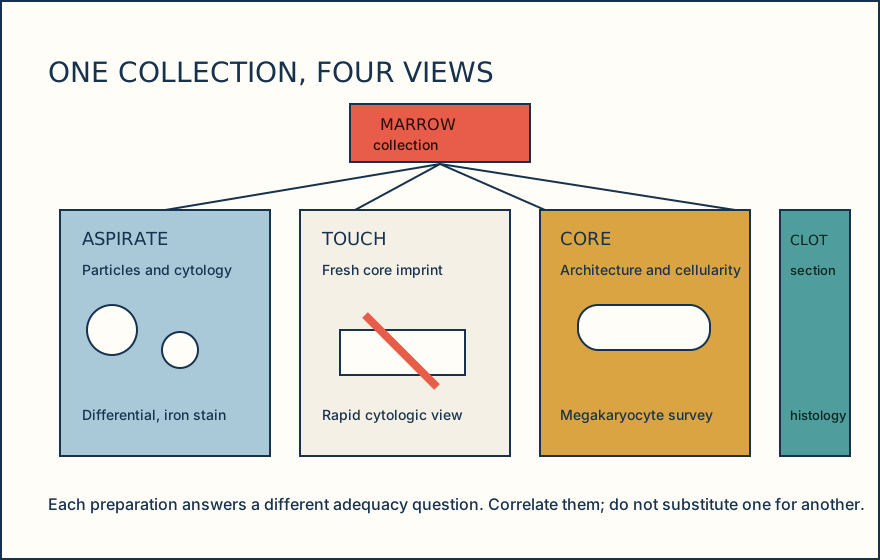
Aspirate and core are complementary specimens, not interchangeable duplicates. The aspirate supplies particles for cytology, a differential, and iron staining. A fresh touch preparation gives a rapid cytologic view from the core, especially when the aspirate is dry or hemodilute. The core and clot section preserve tissue relationships and support cellularity and megakaryocyte survey.
Low power establishes where the specimen is representative. Start in particle-rich areas, survey cellularity and distribution, then choose intact fields for higher-power lineage review. Avoid using a dilute trail, necrotic region, crushed area, or isolated tiny fragment as the basis for a global statement. A high-power image does not repair a poor low-power field selection.
Use the same sequence each time so a fast review remains auditable. The method measures prepared material in selected fields, not the entire marrow cavity. Survey first, select representative particles second, and count only after preparation quality is established.
Illustrative drawing — this picture was drawn rather than captured.
Illustrative drawing — this picture was drawn rather than captured.
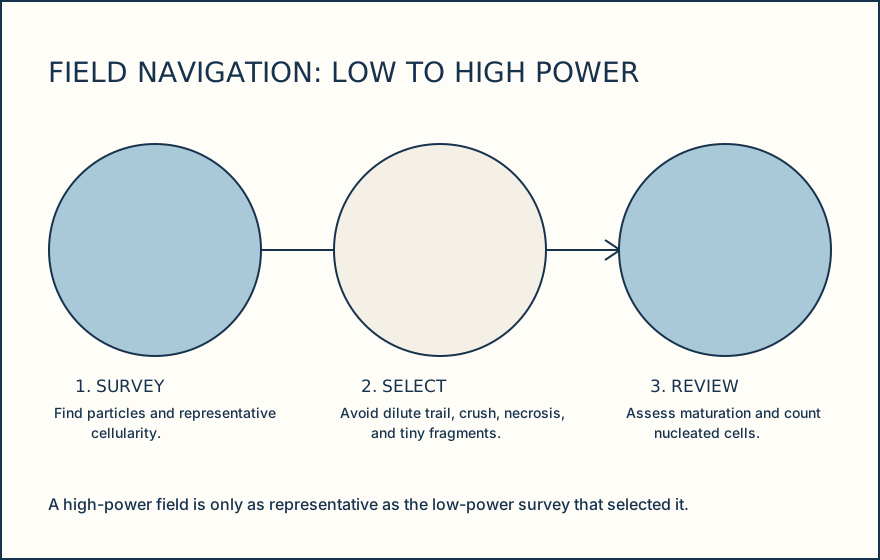
Repeatable marrow field-navigation sequence.
Survey at low power
Locate particle-rich areas and compare their cellularity and distribution.
Exclude unrepresentative fields
Set aside dilute trail, necrotic, crushed, and very small fragments.
Review at high power
Assess maturation, count nucleated cells, and record limitations with the selected fields.
Knowledge checks
Reading and checks are open. Sign in only to save.
Knowledge check 1
Section status
Finish this section
Reading and checks are open. Sign in only to save.
The module finishes after every required section is marked done and every check in those sections is correct.