Required section · Section 3 of 6
Limits that change the fraction pattern
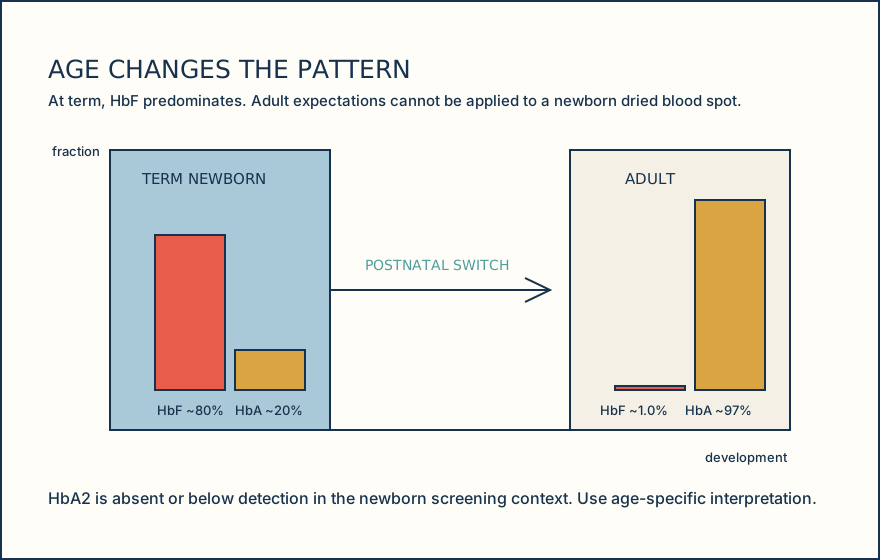
Age is part of the analytical context. At term, newborn fractions are approximately HbF 80% and HbA 20%, and HbA2 is absent or below detection on a newborn dried blood spot. These fractions require age-specific interpretation and are not adult HbA2 expectations. Newborn screening rules and follow-up requirements are jurisdiction-specific. Do not represent a local screening algorithm as a national diagnostic rule.
A red-cell transfusion can add donor HbA and dilute or obscure the recipient pattern. A stem-cell transplant can produce donor-derived erythropoiesis, making fractions a changing biologic pattern rather than a stable genotype readout. Curative therapies that alter erythropoiesis or globin production can also change fraction percentages. Collect that history before resolving a discrepant fractionation result. A posttransfusion pattern may need qualification or deferral according to local policy.
Modified fractions matter only when they can change a release or reflex decision. Glycated hemoglobin has a glucose adduct and carbamylated hemoglobin has a cyanate-derived adduct; on cation-exchange HPLC, either can affect an unexpected peak. For that HPLC result, inspect the chromatogram and compare its retention time with the current analyzer, reagent, and software interference table in the assay instructions; if that limitation remains, perform the locally validated CE follow-up. Do not generalize this HPLC follow-up to another method.
Illustrative drawing — this picture was drawn rather than captured.
Knowledge checks
Reading and checks are open. Sign in only to save.
Knowledge check 1
Knowledge check 2
Section status
Finish this section
Reading and checks are open. Sign in only to save.
The module finishes after every required section is marked done and every check in those sections is correct.