Required section · Section 1 of 6
An elevated fraction is not yet an identity
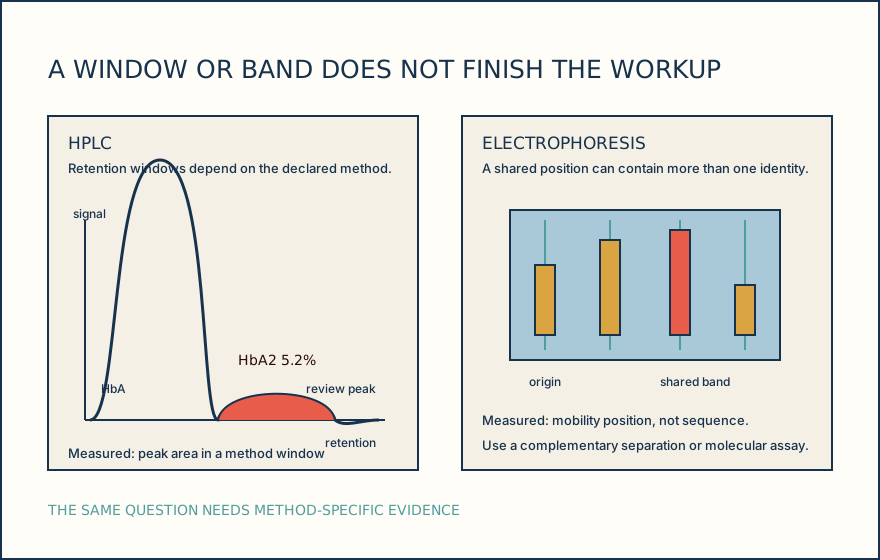
An outpatient EDTA whole-blood specimen has no transfusion, transplant, or gene-therapy history in the available order. HbA2 is the minor adult delta-chain hemoglobin fraction and HbF is fetal hemoglobin containing gamma chains. Its cation-exchange high-performance liquid chromatography, abbreviated HPLC, report shows HbA 91.0%, HbA2 5.2%, HbF 1.0%, with the remaining area in the minor glycated and unnamed windows, and no reportable variant peak. The analyzer flag asks for review of elevated HbA2. The question is not whether a number can be read. It is what the method measured, what it may mean, and what remains unresolved.
Hemoglobin fractionation is an analytical separation whose pattern can support, but does not always establish, an abnormal hemoglobin identity. A peak, band, zone, or focus reflects the property used by that method. Retention, mobility, isoelectric point, and gene sequence are different kinds of evidence. Instrument windows and naming tables are platform, reagent, and software dependent. A fraction label should therefore follow the declared method and local policy.
The complete blood count, abbreviated CBC, gives the pattern needed beside the fraction result. In this case, red blood cells are 5.42 × 10^12/L, mean corpuscular volume is 71 fL, and mean corpuscular hemoglobin is 22.5 pg, all against the local adult intervals shown later. That microcytosis with elevated HbA2 supports beta-thalassemia carrier evaluation, but it does not prove genotype or exclude other influences. Release a fraction result as method-specific evidence, not as an unsupported variant identity.
Illustrative drawing — this picture was drawn rather than captured.
Knowledge checks
Reading and checks are open. Sign in only to save.
Knowledge check 1
Section status
Finish this section
Reading and checks are open. Sign in only to save.
The module finishes after every required section is marked done and every check in those sections is correct.