Required section · Section 5 of 6
Rank the causes, choose the next step
You are handed the guided case panel: blood 2+, protein trace, sediment RBC 0 to 2/HPF within this case laboratory's local interval, no visible red color, no analyzer flag, specimen 35 minutes old. Before you act, rank the plausible explanations by how well the evidence you have supports each one, and decide what the laboratory should do next.
A second, contrasting panel from the same shift: nitrite negative, leukocyte esterase negative, but the ordering note mentions dysuria and urinary frequency. Sediment shows no bacteria and no WBCs. A negative nitrite and LE pair in a symptomatic patient does not rule out a urinary tract infection; short bladder dwell time before a rushed collection, a non-nitrate-reducing organism, or simply early or low-burden infection can all produce this exact chemistry pattern with a clean sediment.
For both panels, resist naming a specific disease. Score yourself on the evidence you selected, the limitations you recognized in the pads involved, and the laboratory action you chose, not on a diagnosis. The correct next step in both cases is a laboratory action supported by the record: confirm preanalytical and QC status first, then follow the local discrepant-result algorithm; after clean checks, choose a repeat, morphology review only when enough intact RBCs are present, alternate method, recollection, or communication for the evidence it can address.
A defensible next step names the specific pad limitation or specimen variable in play and points to a concrete action, repeat, alternate method, recollection, or communication, rather than a diagnostic label.
Illustrative drawing — this picture was drawn rather than captured.
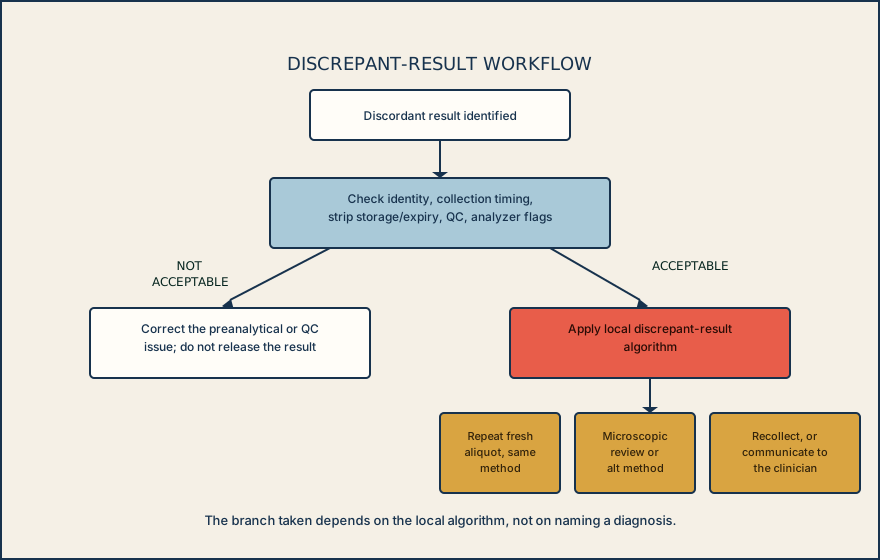
Ordering exercise
Put the response to a discordant urinalysis panel in the order the laboratory should actually work it, from first check to final step.
1. Apply the local discrepant-result algorithm
With preanalytical and analytical checks clean, follow the written procedure for repeat, alternate method, recollection, or communication.
2. Document and communicate the outcome
Record what was checked and done, and communicate a pattern that clinical correlation is needed for, without naming a diagnosis.
3. Verify specimen identity and collection timing
Confirm the specimen belongs to the patient and was tested within the expected window after collection.
4. Verify QC status and analyzer flags
Confirm the day's control results met acceptance criteria and the analyzer raised no flag on this specimen.
5. Verify strip lot, storage, and expiration
Confirm the reagent strip used for this result was stored correctly and had not expired.
Knowledge checks
Reading and checks are open. Sign in only to save.
Knowledge check 1
Knowledge check 2
Knowledge check 3
Section status
Finish this section
Reading and checks are open. Sign in only to save.
The module finishes after every required section is marked done and every check in those sections is correct.