Required section · Section 5 of 6
Learner decision
Rank the evidence in the case before naming a pattern. The strongest compatible combination is marked microcytosis, mild anemia, relatively increased RBC count, target cells, ferritin that does not support iron deficiency, and increased HbA2 on the local method. Each item changes the differential. HbA2 alone would be insufficient because iron status, variants, and method performance can change its interpretation.
The case supports a beta-thalassemia carrier pattern. Molecular or family correlation is appropriate when the pattern is discordant or clinically requested; alpha-thalassemia coinheritance remains a possible limitation.
For a microcytic adult pattern with nondiagnostic adult separation, alpha-thalassemia trait remains possible. For HbH disease, HbH detection ranges after the fetal-to-adult switch are 0.8%-40% (Alpha-Thalassemia GeneReviews), but molecular testing is needed to establish involved HBA1 and HBA2 variants. Hb Bart hydrops fetalis syndrome also requires molecular confirmation for diagnosis and family studies. Select molecular or family correlation when the answer will resolve a material limitation, not use a fraction percentage as a substitute.
Illustrative drawing — this picture was drawn rather than captured.
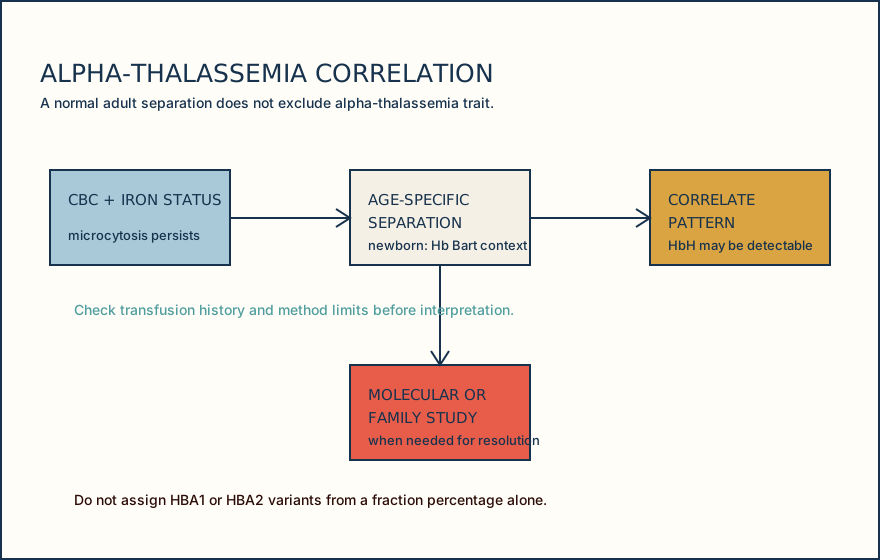
Ordering exercise
Put the evidence workflow in the order that prevents a fraction result from becoming a premature genotype call.
1. Interpret age-appropriate fractions
Review HbA2, HbF, HbH, or Hb Bart with the separation method.
2. Choose correlation
Use second-method, molecular, or family correlation when justified.
3. Review CBC and smear
Identify the anemia, index, count, and morphology pattern.
4. Confirm context
Check iron, age, transfusion history, and local method limits.
Knowledge checks
Reading and checks are open. Sign in only to save.
Knowledge check 1
Section status
Finish this section
Reading and checks are open. Sign in only to save.
The module finishes after every required section is marked done and every check in those sections is correct.